
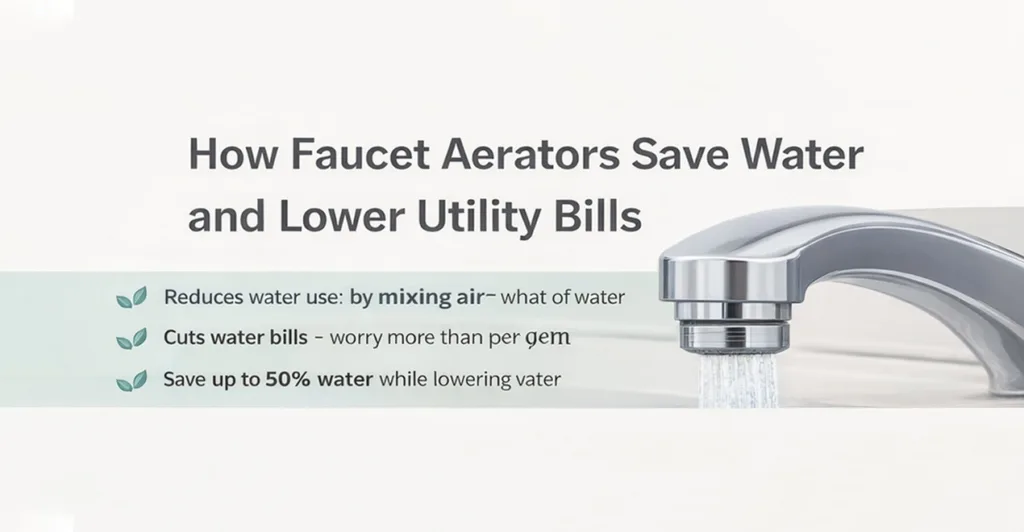
How Faucet Aerators Help Save Water and Lower Utility Bills
Meta Description
Discover how faucet aerators save water, reduce utility bills, and improve water efficiency. Learn the benefits, types, and installation tips for water-saving faucet aerators.
Introduction
With rising water costs and growing environmental awareness, homeowners and businesses are searching for efficient and practical ways to conserve water. One of the most powerful yet affordable solutions is installing a faucet aerator.
A faucet aerator is a small but highly effective device that attaches to the tip of a faucet and mixes air with water. This simple technology creates a smooth, pressurized stream while reducing the total amount of water used.
The result is impressive: lower water bills, reduced environmental impact, and improved faucet performance.
In this guide, we will explore how faucet aerators work, why they save water, and why they are becoming an essential component of modern water-saving faucet technology.
What Is a Faucet Aerator?
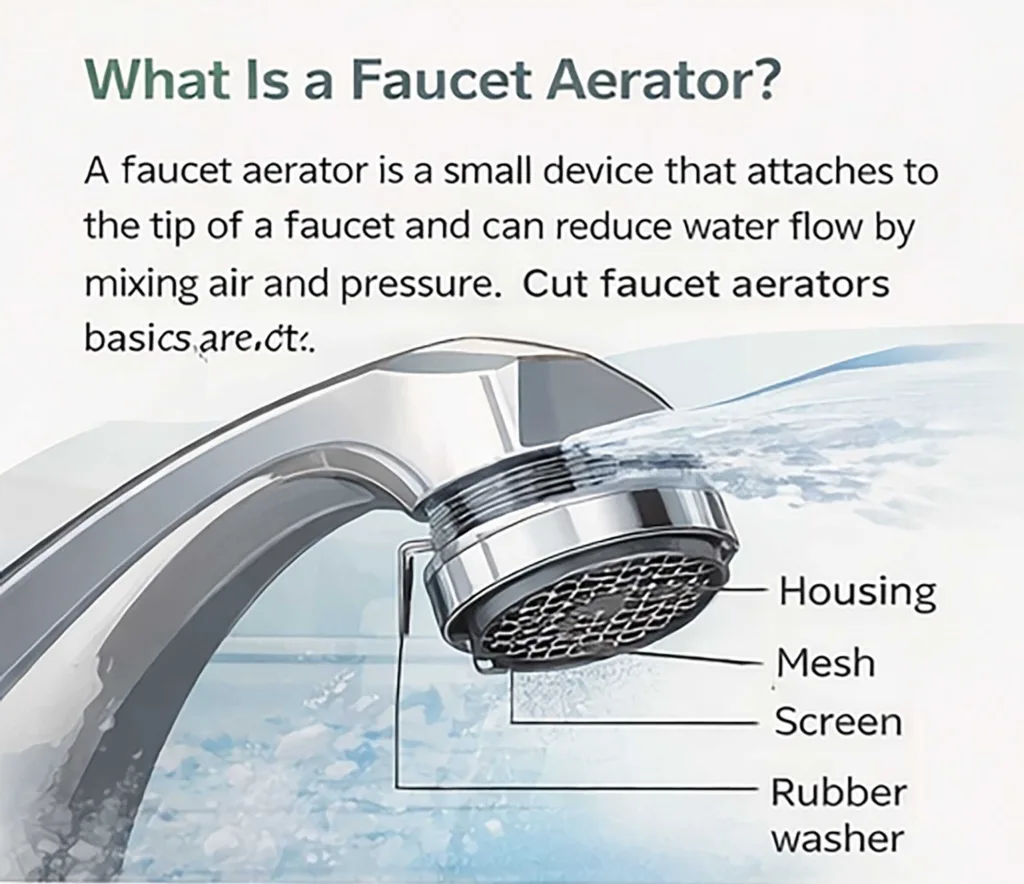
A Faucet Aerator is a small mesh device installed at the end of a faucet spout. It regulates water flow by mixing air into the stream, which maintains strong water pressure while significantly reducing water consumption.
Aerators typically consist of several components:
Housing – the outer casing that screws onto the faucet
Mesh screen – breaks water into multiple small streams
Flow restrictor – limits water flow rate
Rubber washer – prevents leaks
Although the device is small, its impact on water efficiency and utility savings is remarkably powerful.
How Faucet Aerators Save Water
1. Reducing Water Flow Without Losing Pressure
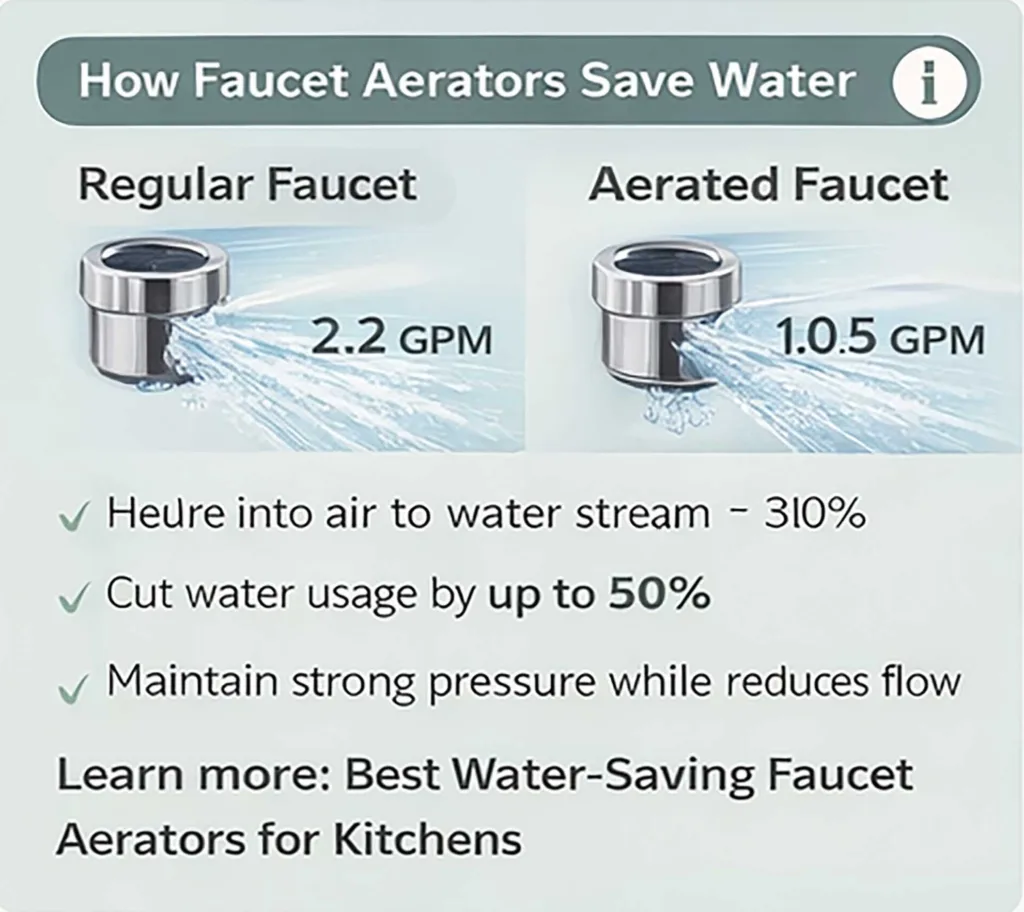
Standard faucets often release water at 2.2 gallons per minute (GPM) or more. A water-saving faucet aerator can reduce this to 1.5 GPM or even 1.0 GPM.
By mixing air with water, the aerator creates the feeling of a full, powerful stream while using less water.
This technology allows households to cut water usage by up to 30–50% without sacrificing comfort.
2. Minimizing Water Waste
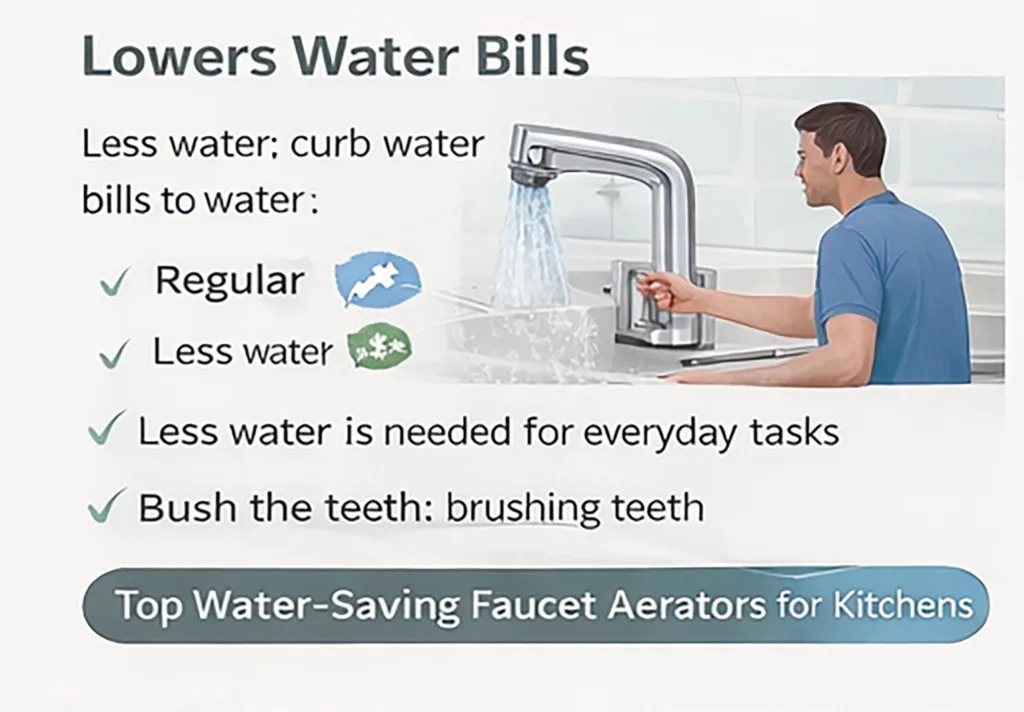
Many everyday tasks—such as washing hands, brushing teeth, or rinsing vegetables—do not require high water flow.
A faucet aerator ensures that only the necessary amount of water is used. Over time, this small adjustment leads to significant water conservation.
For example:
Brushing teeth with a normal faucet can waste gallons of water.
With an aerator, water flow is controlled and efficient.
3. Lowering Utility Bills
Water savings naturally lead to lower utility costs.
When less water flows through your faucet:
Your water bill decreases
Your water heating cost decreases
Your overall household energy consumption drops
This is especially beneficial in homes and commercial buildings with multiple faucets used daily.
Additional Benefits of Faucet Aerators
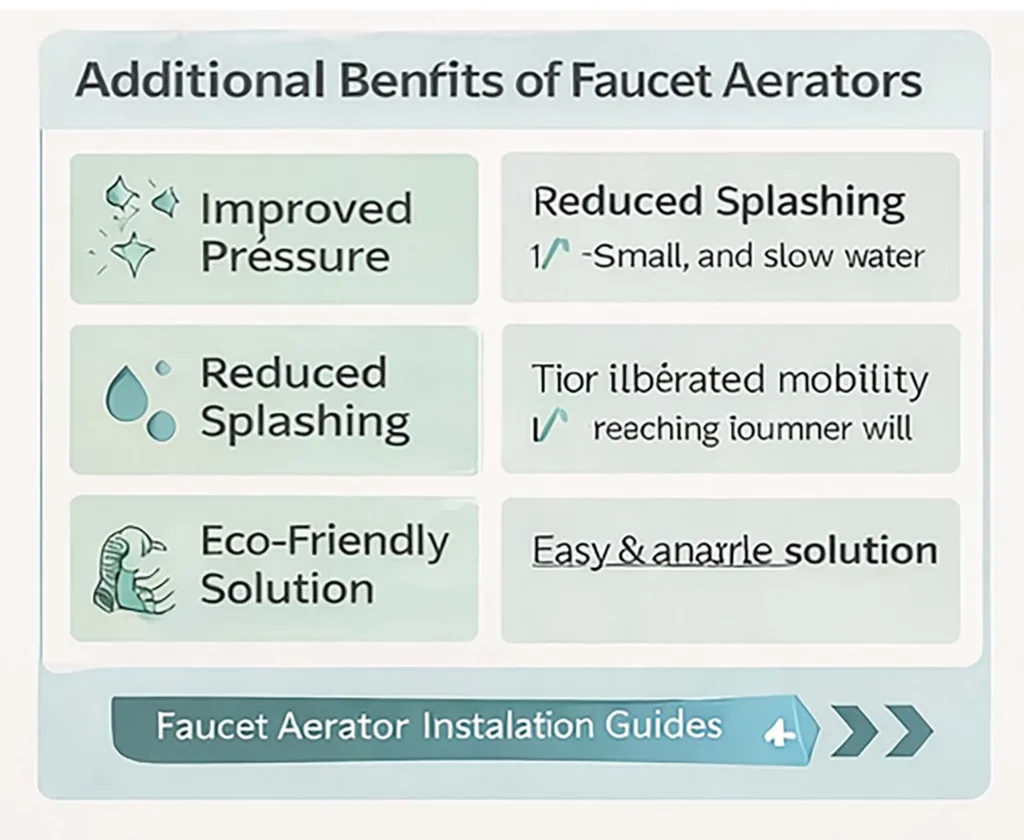
Improved Water Pressure
Because aerators mix air with water, they create a smooth and pressurized stream. This often makes the water feel stronger and more comfortable compared to unrestricted flow.
Reduced Splashing
The mesh screen breaks water into smaller streams, reducing splashing.
This is particularly useful in:
kitchen sinks
commercial wash basins
Less splashing means cleaner countertops and less wasted water.
Eco-Friendly Water Conservation
Water conservation is becoming a global priority. By installing aerators, households can contribute to sustainable water management.
Reducing water usage helps protect natural resources and supports long-term environmental sustainability.
Types of Faucet Aerators
There are several types of faucet aerators designed for different applications.
Standard Faucet Aerators
These are the most common aerators used in residential kitchens and bathrooms. They balance water efficiency and everyday usability.
Low-Flow Aerators
Low-flow models are specifically designed to maximize water savings.
They usually operate at 1.0–1.5 GPM, making them ideal for eco-friendly homes.
Dual-Thread Aerators
Dual-thread aerators are compatible with both male and female faucet threads, making installation more flexible.
Swivel Faucet Aerators
Swivel aerators allow the water stream to rotate and change direction, which is useful for rinsing large sinks or dishes.
Faucet Aerator Installation Guide
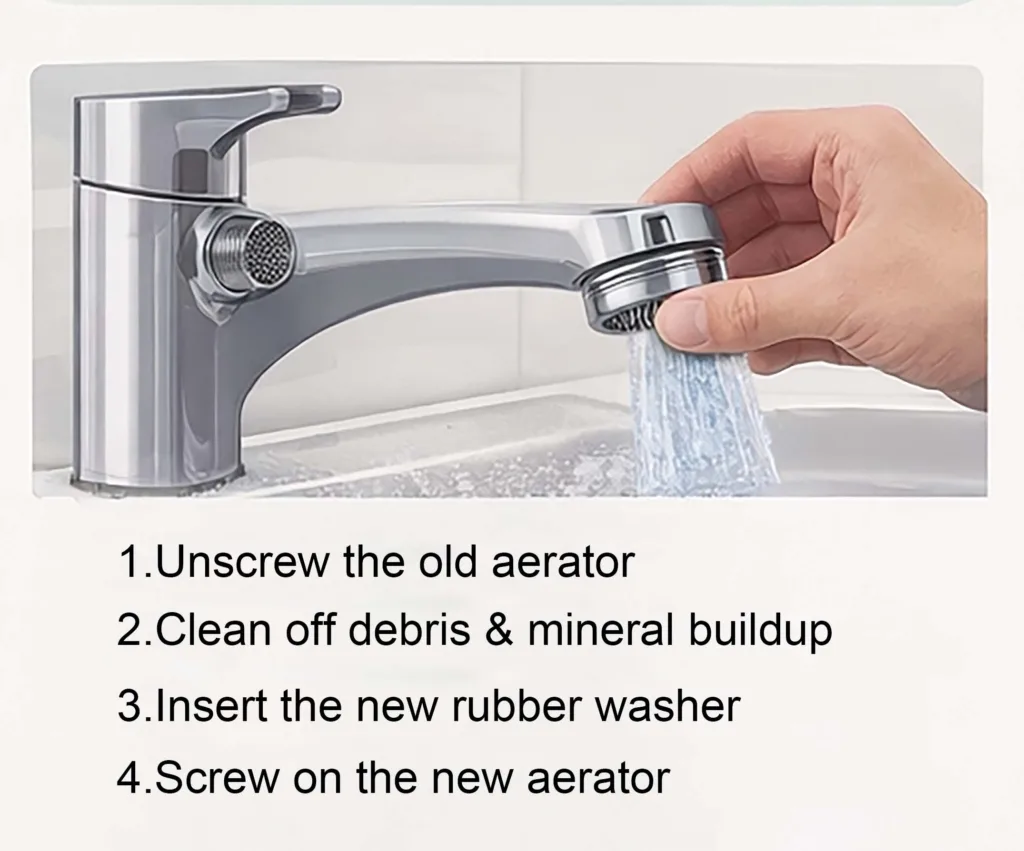
Installing a faucet aerator is quick and simple, and most homeowners can do it without professional help.
Step 1: Remove the Old Aerator
Unscrew the existing aerator from the faucet tip by hand or using a wrench.
Step 2: Clean the Faucet Threads
Remove debris or mineral buildup to ensure a proper seal.
Step 3: Insert the Washer
Place the rubber washer inside the new aerator housing.
Step 4: Screw the Aerator Onto the Faucet
Tighten it gently by hand until secure.
Once installed, your faucet will instantly become more water-efficient.
How Much Water Can Faucet Aerators Save?
The impact of installing aerators can be surprisingly significant.
Average household estimates:
Over a year, this can result in thousands of gallons of water saved.
For businesses such as restaurants, hotels, or office buildings, the savings can be even greater.
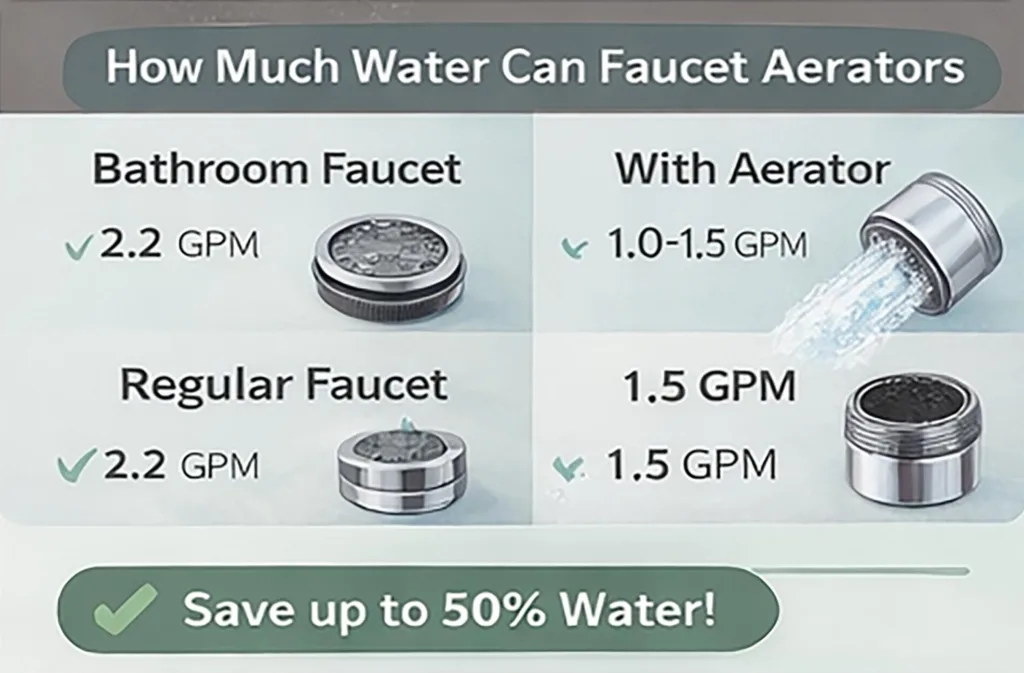
| Faucet Type | Without Aerator | With Aerator |
|---|---|---|
| Bathroom Faucet | 2.2 GPM | 1.0–1.5 GPM |
| Kitchen Faucet | 2.2 GPM | 1.5 GPM |
| Annual Water Use | Higher | Up to 50% less |
Why Faucet Aerators Are Essential for Modern Homes
Today’s homeowners are prioritizing efficiency, sustainability, and smart water management.
Faucet aerators support these goals by providing:
cost-effective water conservation
improved faucet performance
easy installation
long-term utility savings
Because they are inexpensive and highly effective, aerators are considered one of the best upgrades for any faucet system.
Maintenance Tips for Faucet Aerators
To keep aerators functioning properly, regular maintenance is recommended.
Clean Every Few Months
Mineral deposits from hard water can clog the mesh screen. Remove the aerator and rinse it under running water.
Soak in Vinegar
For stubborn buildup, soak the aerator in vinegar for several hours to dissolve minerals.
Replace When Necessary
Aerators are inexpensive, so replacing them periodically ensures optimal performance.
Conclusion
Faucet aerators prove that small innovations can deliver powerful results. By mixing air with water and regulating flow, these compact devices help households and businesses save water, reduce energy consumption, and lower utility bills.
From improved water pressure to environmental sustainability, the benefits are clear. Installing a faucet aerator is one of the simplest and most effective upgrades for any kitchen or bathroom faucet.
As water conservation becomes increasingly important worldwide, faucet aerators will continue to play a crucial role in modern water-saving faucet technology.
If you’re looking to improve water efficiency in your home or business, adding a high-quality faucet aerator is a smart and impactful step toward a more sustainable future.