

How to Choose the Best Stainless Steel Kitchen Faucet in 2025 (Expert Tips)
Choosing the right kitchen faucet in 2025 is no longer just a matter of style. Homeowners, developers, and commercial buyers are looking for long-term durability, hygienic materials, water-saving features, and modern convenience. Stainless steel has quickly become the material of choice—especially for customers who want corrosion resistance, safe drinking water, and a sleek modern kitchen aesthetic.
In this guide, we will walk you through how to select the best stainless steel kitchen faucet, which features truly matter, and why stainless steel remains the most reliable faucet material for 2025.
🥇 Why Stainless Steel Faucets Dominate the Market in 2025
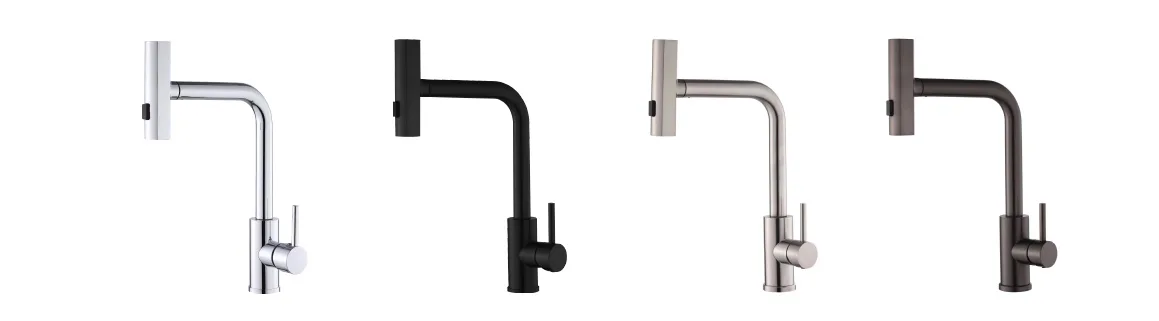
Before comparing models, it’s important to understand why stainless steel is preferred over brass, zinc, or plastic faucets.
1. Superior corrosion resistance
High-grade stainless steel—especially 304 or 316 steel—contains chromium and nickel that form a protective oxide layer.
This means:
No rust
No peeling
No discoloration
Works even in humid coastal environments
This makes stainless steel faucets ideal for kitchens with heavy daily use and areas with hard or salty water.
2. Health and safety advantage
Unlike cheap zinc or brass with thin electroplating, stainless steel:
Has no heavy metal leaching
Is lead-free
Is often certified for drinking water safety
For kitchens where clean water matters—family homes, cafés, hotels, restaurants—stainless steel is the safest choice.
3. Long-term durability
A stainless steel faucet can easily exceed 10–15 years of use with proper care.
It won’t lose shine, peel, or bubble like electroplated zinc.
This is why many professional developers now specify stainless steel faucets in real estate and commercial projects.
🔐 Understanding Stainless Steel Grades: 304 vs. 316 vs. 201
When selecting a stainless steel faucet, don’t just look at color or shape—know the material grade.
🌟 1. 304 Stainless Steel (Food-grade standard)
- Best balance of durability and price
Excellent corrosion resistance
Safe for drinking water
Standard for most high-quality faucets
Recommended for: Residential kitchens, apartments, small commercial kitchens.
🌟 2. 316 Stainless Steel (Marine-grade)
Contains molybdenum, higher corrosion resistance
Handles saltwater and extreme humidity
Premium build and longest lifespan
Recommended for:
Coastal cities, commercial kitchens, hotels, public buildings.
🌟 3. 201 Stainless Steel (Economy grade)
Lower nickel content
Cheaper but weaker corrosion resistance
Requires more maintenance
Not recommended for long-term or premium projects unless budget is extremely limited.
💡 Faucet Design Types to Consider in 2025
Good material is just step 1. The faucet design can dramatically change how users experience the kitchen.
1. Pull-Out or Pull-Down Faucets
These remain the most popular globally in 2025.
Advantages:
Flexible hose
Easy cleaning of sink corners
Ideal for washing vegetables, pans, and dishes
This style is particularly attractive for busy households and modern kitchens.
2. Gooseneck / High-Arc Faucets
Elegant, easy to use, highly ergonomic.
Provides larger sink workspace
Compatible with large pots and trays
Minimal splash
Preferred in restaurants, families, and open kitchen islands.
3. Single-Handle Faucets
Simple, efficient, and modern.
One lever controls temperature + flow
Less space required
Easy installation and maintenance
Perfect for minimalistic kitchen designs.
4. Dual-Handle Faucets
Traditional but highly reliable.
Independent hot & cold control
Better water mixing accuracy
Still popular in hotels and classic interiors
Ideal for users who prioritize aesthetic and function over ultra-modern style.
🌊 Choose Your Water Outlet Mode
Modern stainless steel faucets provide more than one water flow pattern.
🔹 Stream Mode
Concentrated, fast water
Perfect for filling pots
🔹 Spray Mode
Wide rinsing coverage
Eliminates residue on dishes
Saves water
🔹 Aerated/Bubble Mode
Soft water + air mixture
Reduces splashing
Lowers water consumption
In 2025, buyers should prioritize faucets with multi-mode heads, especially those with switch buttons integrated into the sprayer.
🧼 Finish & Surface Technology (Very Important!)
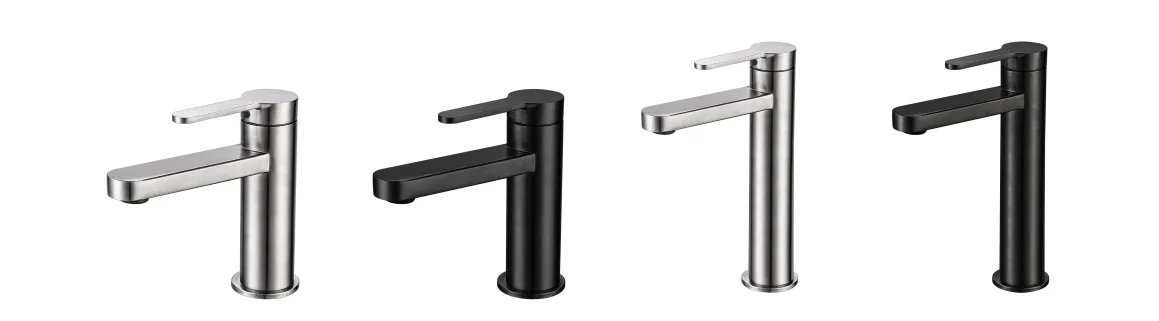
The finish is not just for aesthetics—it affects durability and hygiene.
🌟 Brushed Stainless Steel
Fingerprint resistant
Matches appliances
Super easy to maintain
🌟 Polished Stainless Steel
Mirror-like appearance
High-end hotel look
Requires wiping but looks premium
🌟 Matte (Brushed Nickel or Gunmetal)
Luxury finish
Modern and low-maintenance
Great for contemporary kitchens
Unlike zinc or brass electroplating, stainless steel finishes are:
wear-resistant
not easy to peel
not easy to fade
This is crucial for long-term value.
🛠️ Cartridge Quality: The Heart of the Faucet
If a faucet leaks, the cartridge is usually the reason.
Choose:
Ceramic cartridges
≥500,000 open/close cycles
Heat-resistant & anti-pressure
Low-quality cartridges will:
drip after 3–6 months
crack under hot water
make faucet stiff
A good stainless steel faucet with a reliable cartridge should last 5–10 years of daily use.
💧 Water Efficiency & Smart Features
Environmental policies and consumer expectations are shifting toward water conservation.
Look for faucets with:
6–8 L/min (medium flow standard)
Aerators
Anti-splash engineering
Flow-limiting options
Some high-end 2025 models now include:
touch control
motion sensors
automatic shutoff
These features reduce water waste and improve hygiene in busy kitchens.
📏 Installation and Compatibility
Before purchasing, ask:
Most stainless steel faucets support:
Single-hole
3-hole (with deck plate)
Cold-only for commercial sinks, bars, outdoor use
Standard dual for most homes
If yes, choose models that:
Fit standard 1/2" or 3/8" connectors
Include installation tools or instructions
📦 Pricing Guide: What to Expect
In 2025, price varies based on:
✔️ Stainless steel grade
✔️ Cartridge quality
✔️ Finish
✔️ Extra features (pull-out, spray, etc.)
General benchmarks:
201 stainless steel: Cheap but short lifespan
304 stainless steel: Sweet spot — best for buyers
316 stainless steel: Premium — for harsh conditions
Avoid extremely cheap stainless faucets—usually 201 grade with weak internals.
🆚 Stainless Steel 🆚. Brass 🆚. Zinc
| Material | Safety | Durability | Corrosion | Maintenance |
|---|---|---|---|---|
| Stainless Steel | ⭐⭐⭐⭐⭐ | ⭐⭐⭐⭐⭐ | ⭐⭐⭐⭐⭐ | Low |
| Brass | ⭐⭐⭐⭐ | ⭐⭐⭐⭐ | ⭐⭐⭐ | Medium |
| Zinc Alloy | ⭐⭐ | ⭐⭐ | ⭐⭐ | High |
Most stainless steel faucets have no internal lead, making them superior for drinking water environments.
🏆 Which Stainless Steel Faucet Should You Choose in 2025?
Here are the key decision rules:
✔️ Choose 304 stainless steel for everyday homes
✔️ Choose 316 stainless steel for humid or coastal areas
✔️ Avoid 201 stainless steel for long-term use

✔️ Gooseneck designs for large sinks and families
✔️ Pull-out models if you cook often
✔️ Ceramic 500k-cycle cartridge minimum
✔️ Multi-mode water outlet for performance and savings
📣 Final Thoughts
Today’s kitchens are multifunctional spaces—cooking, socializing, and even working. A faucet is no longer a small accessory; it is a daily-use tool that directly affects hygiene, user comfort, and water safety.
In 2025, the best stainless steel kitchen faucets prove their value through:
longevity
safe materials
convenient design
water efficiency
corrosion resistance
Investing in a quality stainless steel faucet will pay off for years, whether for personal homes, apartment projects, hotels, food service, or commercial developments.