
Why Stainless Steel Faucets Are Ideal for Coastal and High-Humidity Areas
Introduction
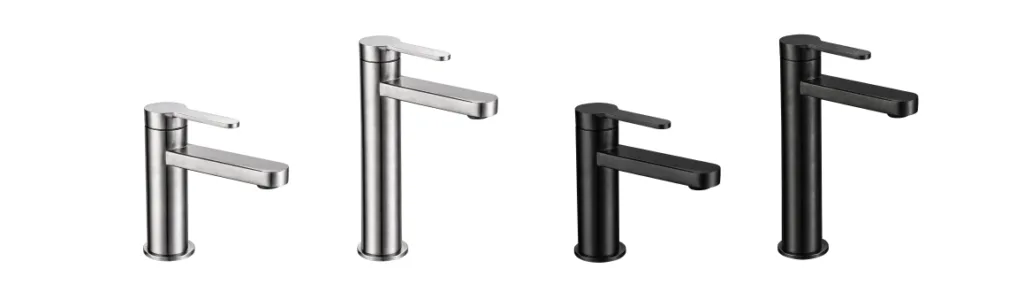
Coastal regions and high-humidity environments present unique challenges for bathroom and kitchen fixtures. Constant exposure to moisture, salt in the air, and temperature fluctuations can quickly damage ordinary faucets, leading to corrosion, leaks, and costly replacements. As a result, buyers, developers, and distributors increasingly ask an important question: which faucet material performs best in coastal and high-humidity areas?
Among all available options, stainless steel faucets stand out as one of the most reliable and long-lasting solutions. Thanks to their corrosion resistance, hygienic surface, and structural stability, stainless steel faucets are widely used in seaside homes, hotels, resorts, and tropical markets worldwide.
This article explains why stainless steel faucets are ideal for coastal and high-humidity areas, what grades work best, and what buyers should consider when sourcing for these demanding environments.
The Challenges of Coastal and High-Humidity Environments
Before understanding why stainless steel performs so well, it is important to recognize the conditions that cause faucet failure in coastal and humid regions.
Salt Air and Corrosion
In coastal areas, airborne salt particles accelerate metal corrosion. Even faucets that perform well inland may suffer surface pitting, rust stains, and internal degradation when exposed to salt-laden air.
Constant Moisture Exposure
High humidity prevents faucets from fully drying after use. This creates a permanent moisture layer on the surface, increasing the risk of oxidation, mold buildup, and finish damage.
Temperature Fluctuations
Many coastal regions experience frequent temperature changes, which can cause inferior materials to expand and contract, leading to leaks and structural weakness over time.
Because of these factors, material selection becomes critical for long-term performance.
What Makes Stainless Steel Different from Other Faucet Materials
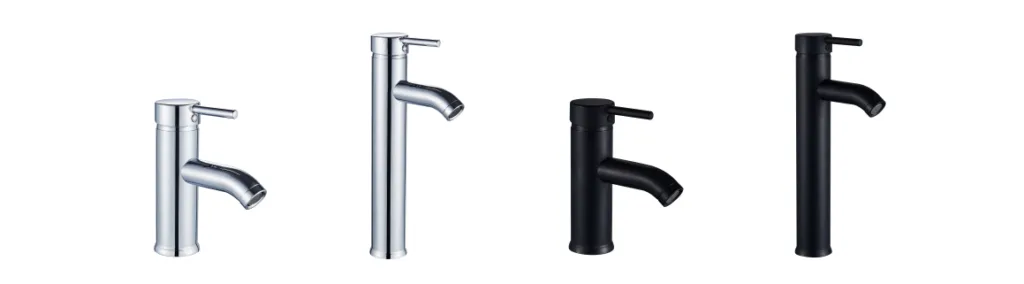
Stainless steel is an alloy primarily composed of iron and chromium, with additional elements such as nickel and molybdenum depending on the grade. Its defining feature is the chromium oxide passive layer, which forms naturally on the surface.
This passive layer:
Prevents rust and oxidation
Self-repairs when scratched
Protects both the exterior and interior waterway
Unlike plated finishes, stainless steel protection is built into the material itself, making it particularly suitable for harsh environments.
Superior Corrosion Resistance in Coastal Areas
One of the main reasons stainless steel faucets are ideal for coastal use is their exceptional resistance to corrosion.
Resistance to Salt-Induced Rust
High-quality stainless steel faucets resist the pitting and rust commonly caused by salt exposure. While chrome-plated or low-grade metal faucets may peel or bubble over time, stainless steel maintains its structural integrity and appearance.
Long-Term Surface Stability
Even after years of exposure to humid air, stainless steel retains a clean, uniform finish without flaking or discoloration. This makes it especially suitable for seaside homes and beachfront properties where aesthetics matter.
Best Stainless Steel Grades for High-Humidity Environments
Not all stainless steel performs equally in coastal conditions. Buyers should pay close attention to material grade.
304 Stainless Steel Faucets
304 stainless steel is the most widely used grade in kitchen and bathroom faucets.
Key benefits:
Excellent corrosion resistance
Stable performance in humid environments
Cost-effective for mass-market applications
For most high-humidity regions, 304 stainless steel faucets provide reliable long-term performance.
316 Stainless Steel Faucets
316 stainless steel contains molybdenum, which significantly improves resistance to chloride corrosion.
Advantages include:
Superior resistance to salt air
Ideal for coastal and marine environments
Preferred for luxury villas, resorts, and hotels
Although more expensive, 316 stainless steel faucets are the best choice for extreme coastal conditions.
Stainless Steel Faucets vs Other Common Materials
Stainless Steel vs Brass Faucets
Brass faucets are durable but may still suffer from corrosion in coastal environments, especially if the protective plating is damaged. In contrast, stainless steel faucets do not rely on surface coatings to prevent rust.
Stainless Steel vs Zinc Alloy Faucets
Zinc alloy faucets are more vulnerable to corrosion and moisture damage. In high-humidity areas, they often experience internal degradation and shorter service life.
For coastal markets, stainless steel clearly offers superior durability and reliability.
Hygiene and Water Safety Benefits
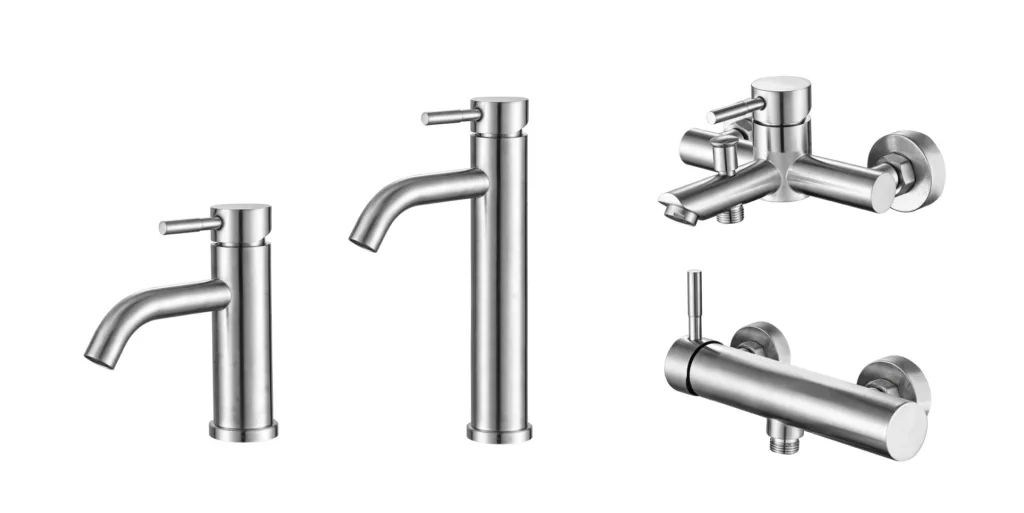
High-humidity environments encourage bacterial growth on porous surfaces. Stainless steel offers a non-porous, smooth surface that resists bacteria buildup.
Additional benefits include:
No lead content
No chemical coatings that can degrade
Safe for drinking water applications
These characteristics make stainless steel faucets a preferred choice for kitchens, bathrooms, and hospitality projects.
Easy Maintenance in Humid Climates
Maintenance is another important factor for buyers in coastal regions.
Stainless steel faucets:
Do not require special cleaning products
Resist water spots and staining
Maintain appearance with simple wiping
This low-maintenance advantage is especially valuable for hotels, rental properties, and commercial projects.
Aesthetic Advantages for Coastal Design
Stainless steel faucets complement popular coastal and tropical interior styles, including:
Minimalist kitchens
Modern bathrooms
Industrial and contemporary designs
Their neutral finish pairs well with stone, wood, and ceramic materials commonly used in seaside architecture.
Sustainability and Long Service Life
Durability directly supports sustainability goals. Stainless steel faucets:
Have longer service life
Reduce replacement frequency
Are fully recyclable
For environmentally conscious buyers and developers, stainless steel represents a responsible long-term investment.
What Buyers Should Look for When Sourcing Stainless Steel Faucets
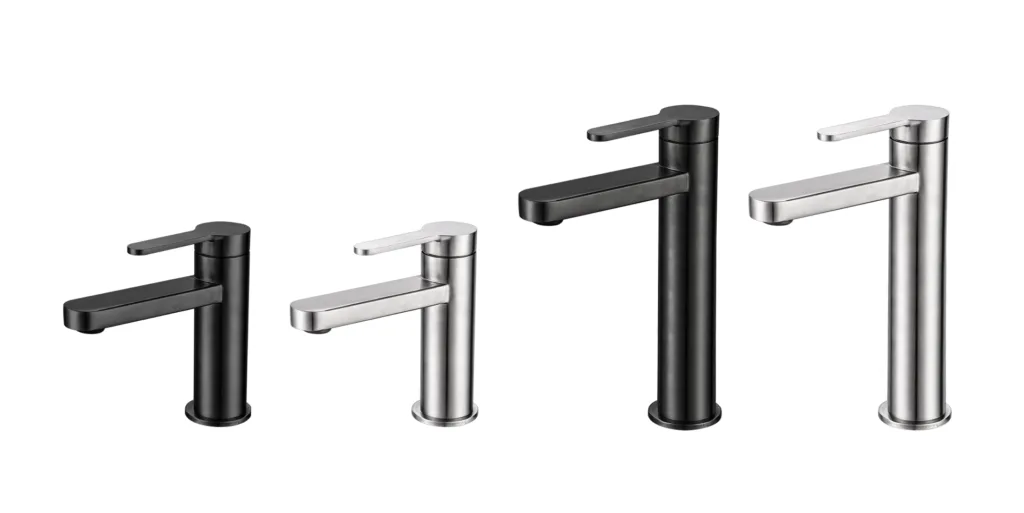
To ensure performance in coastal and humid environments, buyers should:
Confirm stainless steel grade (304 or 316)
Request material certificates
Check internal surface finishing
Verify quality control processes
Working with experienced manufacturers helps reduce risks and ensures consistent quality.
Applications in Coastal and High-Humidity Markets
Stainless steel faucets are widely used in:
Coastal residential homes
Beachfront hotels and resorts
Tropical apartments
Commercial kitchens in humid climates
Their proven performance makes them a preferred solution across global markets.
Future Demand for Stainless Steel Faucets in Coastal Regions
As urbanization and tourism continue to grow in coastal regions, demand for durable, corrosion-resistant faucets is expected to increase. Stainless steel faucets are well positioned to meet this demand due to their performance and compliance with international standards.
Conclusion
Coastal and high-humidity environments demand faucet materials that can withstand constant moisture, salt exposure, and temperature changes. Stainless steel faucets offer unmatched corrosion resistance, hygiene, durability, and long-term value, making them an ideal choice for these challenging conditions.
Whether for residential homes, hospitality projects, or commercial developments, stainless steel—especially 304 and 316 grades—provides buyers with confidence, performance, and lasting quality in coastal and humid markets.