

Why Is My Kitchen Faucet Water Pressure Low? Causes and Easy Fixes
Meta Description
Discover why your kitchen faucet has low water pressure and learn easy DIY fixes. Explore common causes, troubleshooting tips, and solutions to restore strong water flow in your kitchen.
Few things are more frustrating than turning on your kitchen faucet only to find a weak trickle of water instead of a steady, powerful stream. Low water pressure in a kitchen faucet is a common household issue that can make washing dishes, filling pots, and cleaning vegetables more difficult and time-consuming.
Fortunately, low water pressure is often caused by simple problems that homeowners can diagnose and fix without replacing the entire faucet. Whether the issue is a clogged aerator, mineral buildup from hard water, a faulty cartridge, or a plumbing problem, understanding the cause is the first step toward restoring normal water flow.
In this complete guide, you’ll learn the most common causes of low kitchen faucet water pressure, step-by-step troubleshooting methods, effective DIY solutions, and maintenance tips to keep your faucet working like new.
What Is Considered Low Water Pressure?
Water pressure refers to the force that pushes water through your home’s plumbing system and out of your faucet.
A healthy kitchen faucet should provide a strong, steady flow suitable for:
- Washing dishes
- Filling pots quickly
- Cleaning fruits and vegetables
- Everyday cooking tasks
If you notice:
- Weak water flow
- Uneven spray
- Slow pot filling
- Reduced sprayer performance
your faucet may be experiencing low water pressure.
Common Signs of Low Kitchen Faucet Water Pressure
Before identifying the cause, look for these symptoms:
- Water flows much slower than before.
- Spray mode is weaker than normal.
- Only hot or cold water has low pressure.
- Water sputters or sprays unevenly.
- The pull-down sprayer feels weak.
- The faucet makes unusual noises.
Recognizing these signs can help narrow down the source of the problem.
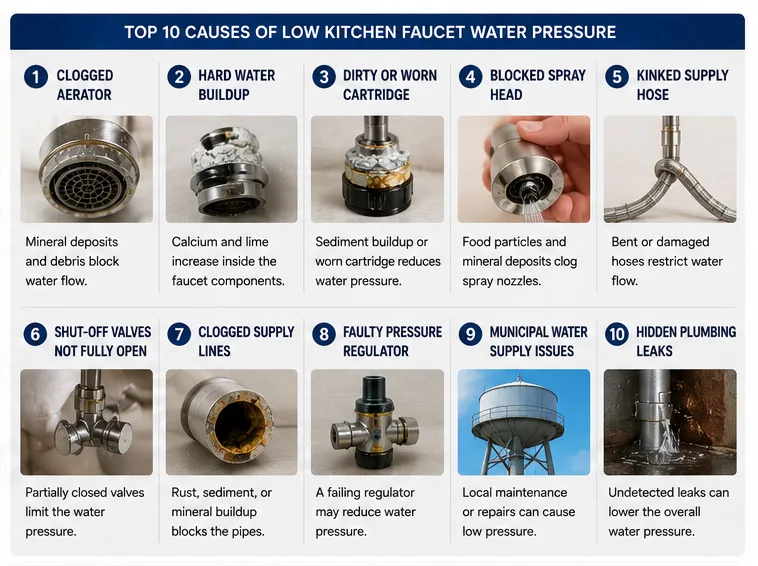
1. A Clogged Faucet Aerator (Most Common Cause)
The aerator is the small screen located at the tip of the faucet spout. It mixes air with water to create a smooth stream while conserving water.
Over time, it can become clogged with:
- Calcium deposits
- Lime scale
- Sand
- Rust particles
- Dirt and debris
This is especially common in homes with hard water.
Symptoms
- Weak flow from the faucet
- Uneven spray pattern
- Water splashing in different directions
How to Fix It
- Unscrew the aerator.
- Rinse it under running water.
- Soak it in white vinegar for 30–60 minutes.
- Gently scrub with a soft brush.
- Reinstall the aerator.
In many cases, this simple cleaning restores full water pressure.
2. Mineral Buildup from Hard Water
Hard water contains high levels of calcium and magnesium. As water flows through your faucet, these minerals can accumulate inside the aerator, cartridge, and spray head.
Common signs include:
- White chalky deposits
- Reduced water flow
- Stiff faucet handle
DIY Solution
Use a mixture of white vinegar and warm water to dissolve mineral deposits. For stubborn buildup, repeat the process regularly.
3. A Dirty or Worn Faucet Cartridge
The cartridge controls both water flow and temperature. Over time, sediment and mineral deposits can affect its performance.
Symptoms
- Low pressure from both hot and cold water
- Difficulty adjusting temperature
- Leaking around the handle
Solution
Turn off the water supply, remove the handle, and inspect the cartridge. Clean it if possible or replace it if worn.
4. Blocked Pull-Down or Pull-Out Spray Head
If you have a pull-down kitchen faucet or pull-out kitchen faucet, the spray head may become clogged.
Food particles, mineral deposits, and sediment can block the tiny spray nozzles.
Easy Fix
- Remove the spray head.
- Soak it in vinegar.
- Clean each nozzle with a soft brush or toothpick.
- Flush with clean water before reinstalling.
5. Kinked or Damaged Supply Hose
Flexible supply hoses connect your faucet to the household plumbing.
A hose that is bent, twisted, or partially collapsed can restrict water flow.
Inspection Tips
Check under the sink for:
- Sharp bends
- Twists
- Cracks
- Leaks
Replace damaged hoses immediately.
6. Shut-Off Valves Not Fully Open
Every kitchen sink has shut-off valves beneath the cabinet.
Sometimes these valves are only partially open after plumbing work or maintenance.
Solution
Carefully turn both the hot and cold shut-off valves fully counterclockwise to ensure maximum water flow.
7. Clogged Water Supply Lines
Older plumbing systems may accumulate:
- Rust
- Sediment
- Mineral deposits
inside supply lines, restricting water flow.
If cleaning the faucet doesn’t solve the issue, disconnect and flush the supply lines.
8. Faulty Pressure Regulator
Some homes use a pressure-reducing valve (PRV) to regulate incoming water pressure.
A failing regulator may cause:
- Low pressure throughout the house
- Fluctuating water flow
- Sudden pressure changes
If multiple faucets are affected, the pressure regulator may need professional inspection.
9. Municipal Water Supply Issues
Sometimes the problem isn’t inside your home.
Low pressure may result from:
- Water main repairs
- Utility maintenance
- Seasonal demand
- Local supply interruptions
Check with your local water provider if all faucets have low pressure simultaneously.
10. Hidden Plumbing Leaks
Leaks inside walls or under floors can reduce available water pressure.
Signs include:
- High water bills
- Damp walls
- Mold growth
- Water stains
Professional leak detection may be necessary.
Step-by-Step Troubleshooting Checklist
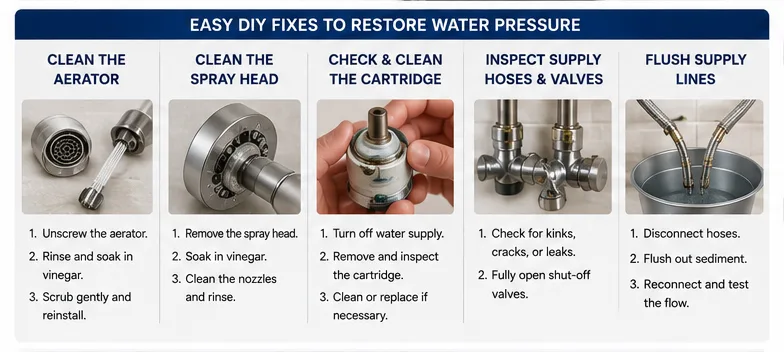
Follow this order before replacing your faucet:
- Check whether only one faucet is affected.
- Clean the aerator.
- Clean the spray head.
- Inspect the cartridge.
- Check supply hoses.
- Verify shut-off valves are fully open.
- Test other faucets in the house.
- Contact your water supplier if the issue is widespread.
This systematic approach helps identify the problem quickly.
How to Prevent Low Water Pressure?
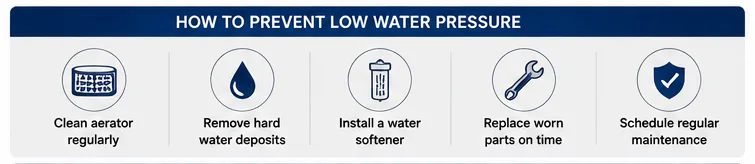
Regular maintenance can help avoid most water pressure problems.
Clean the Aerator Monthly
A quick rinse prevents sediment buildup.
Remove Hard Water Deposits
Use diluted white vinegar every few months to dissolve mineral deposits.
Install a Water Softener
If you live in a hard water area, a water softener reduces calcium and magnesium, helping protect your faucet and plumbing.
Replace Worn Parts
Replace cartridges, aerators, and hoses before they fail completely.
When Should You Replace Your Kitchen Faucet?
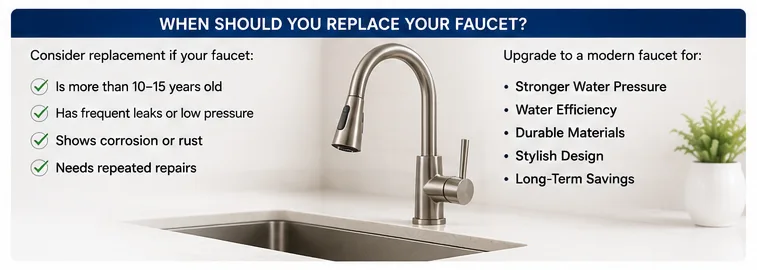
If your faucet is more than 10–15 years old and frequently experiences:
- Leaks
- Corrosion
- Low pressure
- Difficult operation
replacement may be more cost-effective than repeated repairs.
Modern faucets offer:
- Better water efficiency
- Ceramic disc cartridges
- Pull-down sprayers
- Spot-resistant finishes
- Improved corrosion resistance
Why Stainless Steel Kitchen Faucets Perform Better?
Many homeowners upgrade to 304 stainless steel kitchen faucets because they resist:
- Corrosion
- Rust
- Hard water stains
- Mineral buildup
Additional benefits include:
- Long lifespan
- Easy cleaning
- Lead-free construction
- Modern appearance
Frequently Asked Questions
The most common causes are a clogged aerator, mineral buildup, or a worn faucet cartridge.
The spray head is likely clogged with mineral deposits or debris. Cleaning it usually restores normal performance.
Yes. Calcium and magnesium deposits can block aerators, cartridges, and spray nozzles, restricting water flow.
If the faucet is relatively new, repairing clogged components is usually sufficient. If it is old, corroded, or repeatedly malfunctioning, replacing it may be the better long-term solution.
Cleaning it every three to six months is recommended, or more frequently in areas with hard water.
Final Thoughts
Low water pressure in your kitchen faucet doesn’t always mean you need a new faucet. In many cases, a simple aerator cleaning, cartridge replacement, or hose inspection can restore strong water flow in just a few minutes.
For long-term reliability, consider upgrading to a 304 stainless steel kitchen faucet equipped with a ceramic disc cartridge, easy-clean aerator, and pull-down sprayer. These features help reduce maintenance, resist hard water buildup, and provide dependable performance for years.
By following the troubleshooting steps and preventive maintenance tips in this guide, you can keep your kitchen faucet operating efficiently while avoiding unnecessary repair costs.