
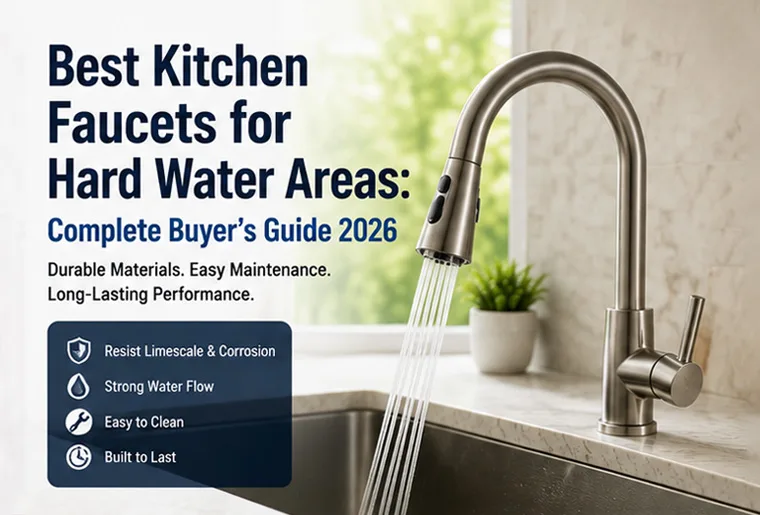
Best Kitchen Faucets for Hard Water Areas: Complete Buyer’s Guide 2026
Meta Description
Discover the best kitchen faucets for hard water areas. Learn about faucet materials, finishes, features, maintenance tips, and how to prevent limescale buildup in 2026.
Hard water is one of the biggest challenges affecting kitchen faucets around the world. Although hard water is generally safe for daily use, the high levels of minerals such as calcium and magnesium can gradually damage kitchen fixtures, reduce water flow, and leave stubborn white stains on faucet surfaces.
If you live in an area with hard water, choosing the right kitchen faucet is essential. A standard faucet may quickly develop problems such as:
- Mineral buildup
- Reduced water pressure
- Clogged aerators
- Corrosion
- Leaking cartridges
- Damaged finishes
The best kitchen faucets for hard water areas are designed with durable materials, corrosion-resistant finishes, and easy-maintenance features to handle these challenges.
In this complete buyer’s guide, we will explain how hard water affects kitchen faucets, which materials perform best, what features to look for, and how to choose a long-lasting faucet for your kitchen.
What Is Hard Water and Why Does It Affect Kitchen Faucets?
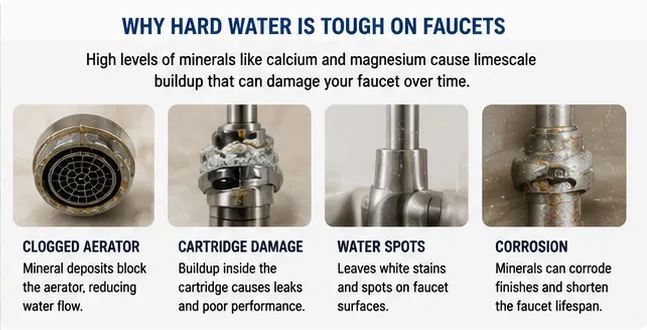
Hard water contains high concentrations of dissolved minerals, mainly:
- Calcium
- Magnesium
- Limestone particles
When water flows through your faucet and evaporates, these minerals remain behind, creating a white or cloudy residue known as limescale.
Over time, hard water can cause:
1. Faucet Aerator Clogging
The aerator is the small mesh screen at the end of your faucet.
Minerals can accumulate inside the aerator and cause:
- Weak water flow
- Uneven spray
- Reduced water pressure
2. Faucet Cartridge Problems
The cartridge controls water flow and temperature.
Mineral deposits can damage internal components, causing:
- Difficult handle movement
- Leaks
- Poor performance
3. Surface Stains and Finish Damage
Hard water often leaves:
- White spots
- Calcium deposits
- Water marks
These deposits make faucets look old and difficult to maintain.
Why You Need a Special Faucet for Hard Water Areas?
Not every kitchen faucet is suitable for hard water environments.
A good hard water kitchen faucet should have:
✔ Corrosion-resistant materials
✔ Easy-clean surfaces
✔ Durable internal components
✔ Replaceable aerators
✔ High-quality cartridges
Choosing the wrong faucet may result in frequent cleaning, repairs, and replacement costs.
Choose the Right Faucet Material
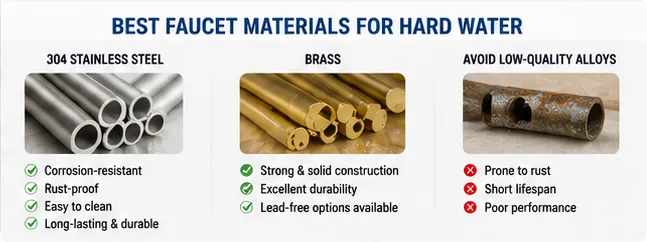
Material is the most important factor when selecting a faucet for hard water.
304 Stainless Steel Kitchen Faucets (Best Choice)
A 304 stainless steel kitchen faucet is one of the best options for hard water areas.
Stainless steel offers excellent resistance against:
- Corrosion
- Rust
- Mineral deposits
- Humidity
Advantages of Stainless Steel Faucets:
Excellent Durability
High-quality stainless steel faucets can last:
15–20 years or longer
with proper maintenance.
Easy to Clean
The smooth surface makes it easier to remove:
- Calcium buildup
- Water spots
- Mineral stains
Hygienic and Safe
304 stainless steel is:
- Non-porous
- Food-safe
- Lead-free
This makes it suitable for drinking water applications.
Modern Appearance
Stainless steel matches many kitchen styles:
- Modern kitchens
- Minimalist kitchens
- Commercial kitchens
- Contemporary homes
Brass Kitchen Faucets
Brass has been widely used in plumbing fixtures for many years.
High-quality lead-free brass faucets offer:
Advantages:
✔ Strong construction
✔ Excellent durability
✔ Reliable internal performance
However, brass faucets usually require more maintenance compared with stainless steel in areas with aggressive hard water.
Avoid Low-Quality Materials
Some budget faucets use low-quality alloys.
Potential problems include:
- Faster corrosion
- Surface peeling
- Short lifespan
- Poor water resistance
Although these faucets may have a lower purchase price, replacement costs can become higher over time.
Best Faucet Finishes for Hard Water Areas
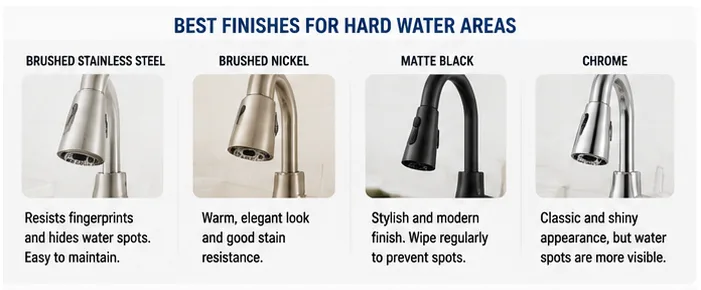
The finish plays an important role in preventing visible water stains.
1. Brushed Stainless Steel Finish (Recommended)
Brushed stainless steel is one of the best finishes for hard water conditions.
Benefits:
✔ Hides fingerprints
✔ Reduces visible water spots
✔ Easy maintenance
✔ Modern appearance
This finish is especially popular for kitchen faucets.
2. Brushed Nickel Finish
Advantages:
- Elegant appearance
- Warm color tone
- Good stain resistance
It works well with traditional and modern kitchen designs.
3. Matte Black Finish
Matte black faucets are popular in modern kitchens.
Benefits:
- Stylish appearance
- Premium design
However, mineral deposits may appear more noticeable if cleaning is neglected.
4. Chrome Finish
Chrome faucets are affordable and attractive.
However:
- Water spots are easier to see
- Requires more frequent cleaning
Best Types of Kitchen Faucets for Hard Water
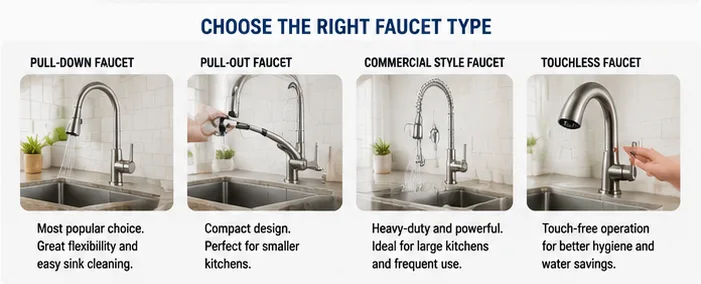
Pull-Down Kitchen Faucets
Pull-down faucets are among the most popular choices.
Advantages:
- Easy sink cleaning
- Flexible spray head
- Better control
- Modern appearance
Choose models with:
- Removable spray heads
- Easy-clean nozzles
- Ceramic cartridges
Pull-Out Kitchen Faucets
Ideal for smaller kitchens.
Benefits:
- Compact design
- Flexible operation
- Easy filling of containers
Commercial Style Kitchen Faucets
Professional kitchen faucets provide:
- Heavy-duty construction
- Strong spray performance
- Premium appearance
They are suitable for:
- Large kitchens
- Restaurants
- Commercial applications
Important Features for Hard Water Kitchen Faucets
1. Ceramic Disc Cartridge
A ceramic cartridge is essential for long-term durability.
Benefits:
- Prevents leaks
- Smooth operation
- Resistant to mineral damage
2. Easy-Clean Aerator
Since hard water often blocks aerators, choose faucets with:
- Removable aerators
- Silicone spray nozzles
- Anti-clog technology
These features make cleaning much easier.
3. Spot-Resistant Finish
Modern faucets often use special coatings designed to reduce:
- Fingerprints
- Water stains
- Mineral marks
4. High-Quality Spray Head
A good spray head should provide:
- Strong water flow
- Easy cleaning
- Reliable switching between modes
Common modes include:
- Stream mode
- Spray mode
- Pause mode
How to Prevent Hard Water Damage to Your Kitchen Faucet?
Even the best faucet requires proper maintenance.
Clean Your Faucet Regularly
Recommended:
- Daily wiping with a soft cloth
- Weekly cleaning in hard water areas
Avoid:
- Abrasive cleaners
- Steel wool
- Harsh chemicals
Remove Limescale Naturally
White vinegar is an effective solution.
Steps:
- Soak a cloth with vinegar.
- Wrap it around mineral deposits.
- Wait 30–60 minutes.
- Rinse thoroughly.
Clean the Aerator
Every few months:
- Remove the aerator.
- Soak it in vinegar.
- Remove mineral deposits.
- Reinstall.
Should You Install a Water Softener?
If your home has severe hard water problems, a water softener can protect:
- Faucets
- Pipes
- Dishwashers
- Water heaters
Benefits include:
✔ Less limescale
✔ Longer faucet lifespan
✔ Better water quality
Common Mistakes When Buying a Faucet for Hard Water
Choosing Price Over Quality
Cheap faucets often have:
- Weak finishes
- Poor cartridges
- Shorter lifespan
Ignoring Material
A beautiful faucet made from poor materials may fail quickly.
Choosing the Wrong Finish
Highly polished finishes may show more water spots.
For hard water areas, brushed finishes are usually better.
Not Checking Replacement Parts
Choose faucets with available:
- Cartridges
- Aerators
- Spray heads
- Hoses
How Long Do Kitchen Faucets Last in Hard Water Areas?
Average lifespan:
| Faucet Quality | Lifespan |
|---|---|
| Low-cost faucet | 3–5 years |
| Mid-range faucet | 8–12 years |
| Premium stainless steel faucet | 15–20+ years |
Proper maintenance can significantly extend faucet life.
Frequently Asked Questions
304 stainless steel is one of the best materials because it provides excellent corrosion resistance and easy maintenance.
Stainless steel does not completely prevent limescale, but it is easier to clean and maintain compared with many other materials.
Yes. Brushed stainless steel and brushed nickel finishes hide water spots better than polished finishes.
Yes. Mineral buildup can affect cartridge performance and eventually cause leaks.
A water filter improves water quality but does not remove hardness minerals. A water softener is better for reducing calcium and magnesium.
Final Thoughts
Choosing the best kitchen faucet for hard water areas requires careful consideration of material, finish, design, and internal components.
For most homeowners, the ideal choice is:
A 304 stainless steel pull-down kitchen faucet with a ceramic cartridge, brushed finish, and easy-clean aerator.
This combination provides:
✔ Long-lasting durability
✔ Corrosion resistance
✔ Easy maintenance
✔ Modern design
✔ Better performance in hard water conditions
A high-quality faucet is not only a kitchen upgrade—it is a long-term investment that saves money, reduces maintenance, and improves your daily kitchen experience.