
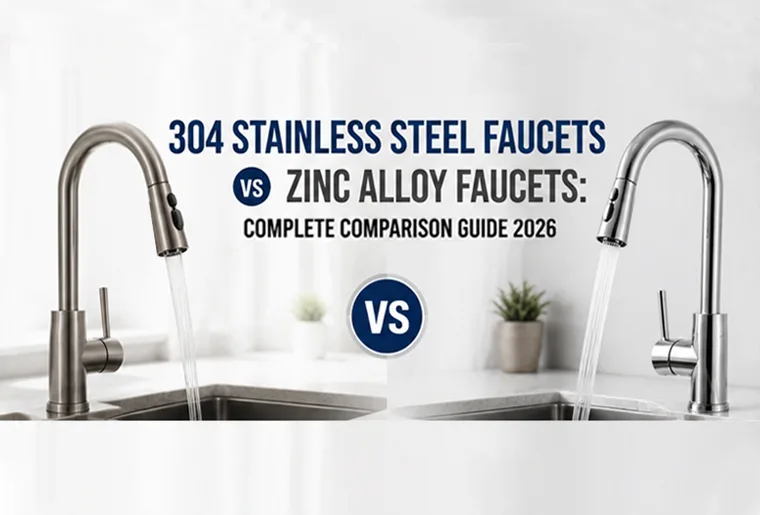
304 Stainless Steel Faucets vs Zinc Alloy Faucets: Complete Comparison Guide 2026
Meta Description
Compare 304 stainless steel faucets vs zinc alloy faucets. Learn the differences in durability, corrosion resistance, safety, price, and how to choose the best faucet material for your home.
Choosing the right faucet material is one of the most important decisions when purchasing a kitchen or bathroom faucet. The material directly affects the faucet’s durability, appearance, corrosion resistance, safety, maintenance requirements, and lifespan.
Among the many faucet materials available today, 304 stainless steel faucets and zinc alloy faucets are two common choices used in residential and commercial plumbing products.
But which one is better?
Should you choose a premium 304 stainless steel kitchen faucet for long-term performance, or select a more affordable zinc alloy faucet for budget-friendly projects?
This complete comparison guide will explain the key differences between 304 stainless steel faucets vs zinc alloy faucets, including material quality, advantages, disadvantages, applications, maintenance, and buying recommendations.
Whether you are a homeowner, builder, contractor, distributor, or faucet wholesaler, this guide will help you choose the best faucet material for your needs.
What Is 304 Stainless Steel?
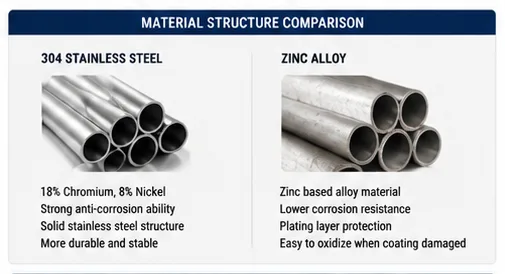
304 stainless steel is one of the most widely used stainless steel grades in the world.
It is commonly used in:
- Kitchen equipment
- Food processing equipment
- Medical products
- Plumbing fixtures
- High-quality faucets
The main components include:
- Chromium
- Nickel
- Iron
The chromium content creates a protective layer that helps prevent corrosion and rust.
Because of its excellent performance, 304 stainless steel has become a preferred material for premium kitchen faucets and bathroom faucets.
What Is a Zinc Alloy Faucet?
Zinc alloy faucets are made primarily from zinc-based materials combined with other metals.
They are commonly used in:
- Budget faucets
- Entry-level bathroom fixtures
- Cost-sensitive projects
The main advantage of zinc alloy is its lower production cost and easier manufacturing process.
However, compared with stainless steel, zinc alloy generally has lower durability and corrosion resistance.
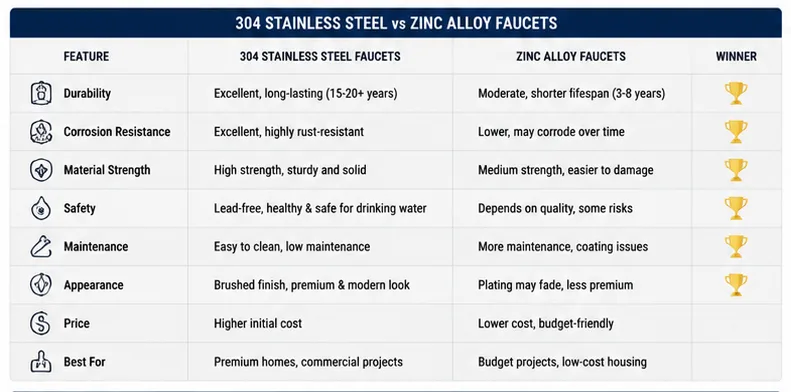
304 Stainless Steel Faucets vs Zinc Alloy Faucets Comparison
| Feature | 304 Stainless Steel Faucet | Zinc Alloy Faucet |
|---|---|---|
| Durability | Excellent | Moderate |
| Rust Resistance | Excellent | Lower |
| Lifespan | 15–20+ years | 3–8 years |
| Material Strength | High | Medium |
| Maintenance | Low | Higher |
| Safety | Excellent | Depends on quality |
| Price | Higher | Lower |
| Premium Feeling | Yes | Moderate |
| Best Application | Premium homes, commercial | Budget projects |
1. Durability: Stainless Steel Has a Longer Lifespan
Durability is one of the biggest differences between these two materials.
A faucet is used every day, often dozens of times.
A high-quality faucet needs to withstand:
- Water pressure
- Temperature changes
- Frequent operation
- Cleaning chemicals
- Humidity
304 Stainless Steel Faucet
Advantages:
✔ Strong structure
✔ Excellent impact resistance
✔ Long-term stability
✔ Less chance of cracking or breaking
A quality stainless steel faucet can often last:
15–20 years or longer
with proper maintenance.
Zinc Alloy Faucet
Zinc alloy faucets are lighter and more affordable.
However, over time they may experience:
- Surface oxidation
- Material aging
- Reduced strength
Their lifespan is usually shorter compared with stainless steel models.
Winner: 304 Stainless Steel Faucet ⭐⭐⭐⭐⭐
For long-term investment, stainless steel provides better durability.
2. Corrosion Resistance: Stainless Steel Performs Better
Water exposure is unavoidable for faucets.
Especially in:
- Coastal areas
- Humid climates
- Hard water regions
corrosion resistance becomes extremely important.
Why Stainless Steel Resists Rust
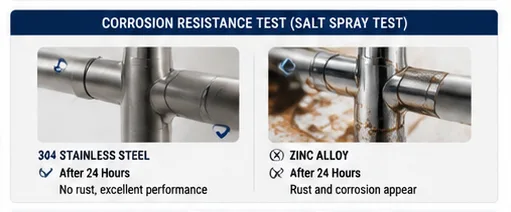
304 stainless steel contains chromium, which forms a protective oxide layer.
This layer helps protect against:
- Rust
- Corrosion
- Moisture damage
This makes it ideal for:
- Kitchen faucets
- Bathroom faucets
- Outdoor washing areas
Zinc Alloy Corrosion Performance
Zinc alloy can perform well when properly coated.
However, once the surface coating becomes damaged, problems may appear:
- Corrosion
- Surface discoloration
- Finish peeling
Winner: 304 Stainless Steel Faucet ⭐⭐⭐⭐⭐
For wet environments, stainless steel is the safer choice.
3. Appearance and Design Options
Modern homeowners care about both performance and appearance.
Stainless Steel Faucet Design
304 stainless steel faucets offer a premium look.
Popular finishes include:
Brushed Stainless Steel
Benefits:
- Hides fingerprints
- Reduces water marks
- Modern appearance
Popular for:
- Luxury kitchens
- Contemporary bathrooms
Brushed Nickel Style
Provides:
- Elegant appearance
- Warm design feeling
Zinc Alloy Faucet Design
Zinc alloy can also have attractive finishes.
Common options:
- Chrome plating
- Painted finishes
- Decorative coatings
However, the appearance may deteriorate faster if the coating wears.
Winner: Stainless Steel Faucet
For modern and long-lasting appearance, stainless steel has an advantage.
4. Safety and Health Considerations
Kitchen faucets are closely connected with water quality.
Many homeowners are concerned about:
- Lead
- Harmful substances
- Water contamination
304 Stainless Steel Faucet Safety
304 stainless steel is widely used in food-related applications because it is:
- Non-porous
- Hygienic
- Easy to clean
It is especially suitable for:
- Drinking water faucets
- Water filter faucets
- Kitchen faucets
Zinc Alloy Faucet Safety
The safety depends on:
- Material quality
- Manufacturing standards
- Internal components
High-quality zinc alloy faucets can meet standards, but lower-quality products may have concerns.
Winner: Stainless Steel Faucet
Winner: Stainless Steel Faucet
5. Maintenance Requirements
A faucet should not only look good when new—it should remain attractive after years of use.
Stainless Steel Maintenance
Advantages:
✔ Easy cleaning
✔ Resistant to stains
✔ Requires less maintenance
Usually cleaning requires only:
- Soft cloth
- Mild detergent
- Water rinse
Zinc Alloy Maintenance
Zinc alloy faucets often depend heavily on surface coating.
If the coating becomes damaged:
- Cleaning becomes more difficult
- Appearance may decline
Winner: Stainless Steel Faucet
6. Performance in Hard Water Areas
Hard water is a common challenge worldwide.
It contains minerals such as:
- Calcium
- Magnesium
These minerals can cause:
- White deposits
- Limescale buildup
- Blocked aerators
Stainless Steel Faucet for Hard Water
304 stainless steel performs better because:
- Surface is durable
- Easier to clean
- Less vulnerable to corrosion
Recommended features:
- Ceramic cartridge
- Silicone aerator
- Brushed finish
Zinc Alloy Faucet in Hard Water
Possible problems:
- Faster surface aging
- Coating damage
- More maintenance
Winner: Stainless Steel Faucet
7. Price Comparison
Price is one area where zinc alloy has an advantage.
Zinc Alloy Faucet
Advantages:
✔ Lower cost
✔ Suitable for budget projects
✔ Affordable replacement option
304 Stainless Steel Faucet
Higher initial cost because of:
- Better material
- Higher production quality
- Longer lifespan
However, the long-term value is usually better.
Which One Provides Better Value?
Although stainless steel costs more initially, it can save money because:
- Fewer replacements
- Lower maintenance
- Better performance
8. Best Applications for Each Material
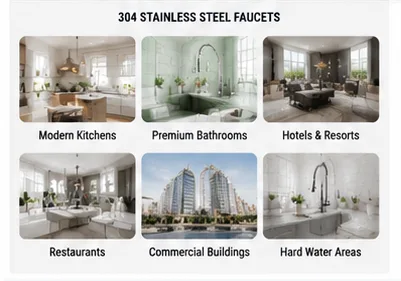
304 Stainless Steel Faucets Are Best For:
✔ Modern homes
✔ Premium kitchens
✔ Hotels
✔ Restaurants
✔ Commercial projects
✔ Hard water areas
✔ Export markets
Popular products:
- Stainless steel kitchen faucet
- Pull-down kitchen faucet
- Bathroom basin faucet
- Water filter faucet
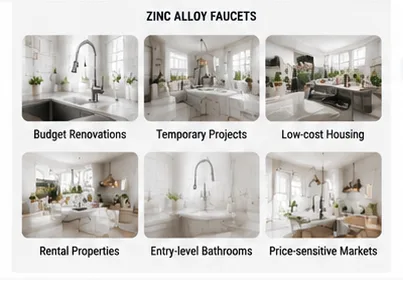
Zinc Alloy Faucets Are Best For:
✔ Budget renovations
✔ Temporary projects
✔ Low-cost housing projects
✔ Price-sensitive markets
Why Are 304 Stainless Steel Faucets Popular for Wholesale Buyers?
For distributors and importers, product quality directly affects customer satisfaction.
Advantages of stainless steel faucets:
Strong Market Demand
Consumers increasingly prefer:
- Durable products
- Healthy materials
- Long-life fixtures
Suitable for Global Markets
Popular in:
- Europe
- North America
- Middle East
- Africa
- South America
Better Brand Reputation
Selling high-quality stainless steel faucets helps businesses build:
- Customer trust
- Repeat orders
- Stronger market position
How to Choose the Best Faucet Material?
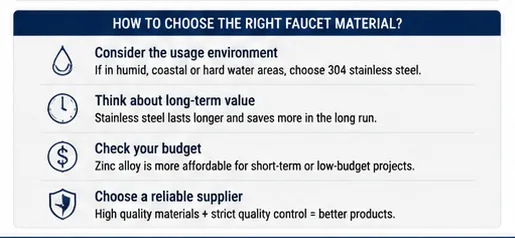
Before purchasing, consider:
1. Application
Kitchen faucet?
Bathroom faucet?
Commercial project?
2. Environment
Consider:
- Hard water
- Humidity
- Coastal climate
3. Budget
If budget is the priority:
→ Zinc alloy may work.
If long-term quality matters:
→ Choose 304 stainless steel.
Lorem ipsum dolor sit amet, consectetur adipiscing elit. Ut elit tellus, luctus nec ullamcorper mattis, pulvinar dapibus leo.
4. Supplier Quality
Always check:
- Material specification
- Production standards
- Warranty support
- Factory experience
Frequently Asked Questions
Yes. Stainless steel faucets generally provide better durability, corrosion resistance, and longer lifespan.
High-quality 304 stainless steel faucets are highly resistant to rust, although extreme conditions may still affect performance.
Zinc alloy faucets can be suitable for budget projects, but they usually do not match stainless steel in durability.
304 stainless steel is one of the best choices for kitchen faucets because it is durable, hygienic, and easy to maintain.
Yes. The longer lifespan and lower maintenance often make stainless steel more cost-effective over time.
Final Conclusion
When comparing 304 stainless steel faucets vs zinc alloy faucets, the choice depends on your budget and requirements.
However, for homeowners, builders, and professional buyers looking for long-term performance, 304 stainless steel faucets are the superior choice.
They provide:
✔ Better corrosion resistance
✔ Longer lifespan
✔ Safer material
✔ Premium appearance
✔ Lower maintenance
✔ Higher long-term value
For modern kitchens, bathrooms, and commercial projects, a 304 stainless steel faucet remains one of the best investments in 2026.