
Stainless Steel vs Brass Kitchen Faucets: Which Is Better?
Meta Description
Compare stainless steel vs brass kitchen faucets. Discover durability, corrosion resistance, water safety, cost, and the best faucet material for your kitchen.
Choosing the right kitchen faucet is an important decision when designing or upgrading a kitchen. A kitchen faucet is used every day for washing dishes, preparing food, filling pots, and cleaning the sink. Therefore, its material directly affects durability, performance, maintenance, and long-term value.
Among the most popular materials available today, stainless steel and brass are two leading choices for kitchen faucets. Both offer excellent benefits, but they have different characteristics in terms of corrosion resistance, strength, appearance, water safety, and price.
So, when comparing stainless steel vs brass kitchen faucets, which is better?
Stainless steel faucets, especially those made from 304 stainless steel, are popular for their corrosion resistance, modern appearance, and easy maintenance. Brass kitchen faucets are widely recognized for their machinability, durability, and traditional use in plumbing fixtures.
In this complete guide, we will compare stainless steel and brass kitchen faucets to help you understand their differences and choose the best faucet material for your home.
1. What Are Stainless Steel Kitchen Faucets?
Stainless steel kitchen faucets are manufactured using stainless steel, an alloy mainly composed of iron, chromium, and other elements. Chromium helps form a thin protective oxide layer on the surface, which improves resistance to rust and corrosion.
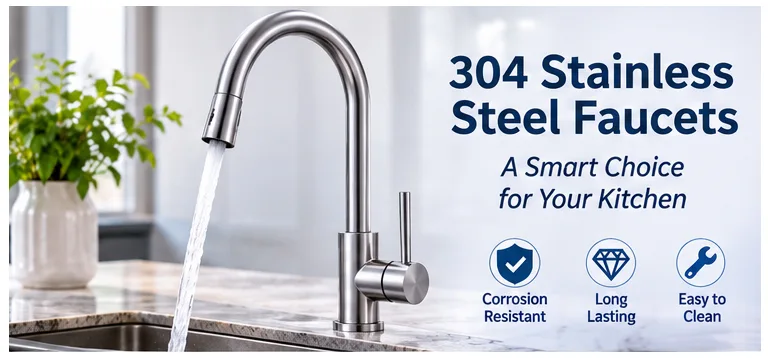
Among different stainless steel grades, 304 stainless steel is widely used in kitchen faucets because of its excellent corrosion resistance, durability, and suitability for daily use. You can also learn more about the advantages of [304 Stainless Steel Faucets] and why they are a popular choice for modern kitchens.
304 stainless steel typically contains approximately 18% chromium and 8% nickel. This combination provides good corrosion resistance, strength, and durability for everyday use.
Key Benefits of Stainless Steel Kitchen Faucets
1. Excellent Corrosion Resistance
Stainless steel offers good resistance to moisture, oxidation, and many common household conditions. This makes it suitable for kitchens where faucets are frequently exposed to water.
2. Modern and Attractive Appearance
Stainless steel faucets are available in brushed, polished, and other finishes. Their clean appearance works well with modern kitchens, stainless steel sinks, and contemporary appliances.
3. Easy Maintenance
Most stainless steel faucets can be cleaned with a soft cloth and mild soap. Their smooth surfaces make everyday maintenance relatively simple.
4. Strong and Durable Construction
High-quality stainless steel provides good mechanical strength and resistance to everyday wear. A properly manufactured faucet can deliver reliable performance for many years.
5. Suitable for Different Kitchen Designs
From minimalist apartments to commercial kitchens, stainless steel faucets offer a versatile appearance that matches many interior styles.
If you want to compare another commonly used faucet material, read our guide to [304 stainless steel vs zinc alloy faucets] for more details.
2. What Are Brass Kitchen Faucets?
Brass kitchen faucets are made from an alloy primarily composed of copper and zinc. Depending on the formulation, small amounts of other elements may also be included to improve specific properties.
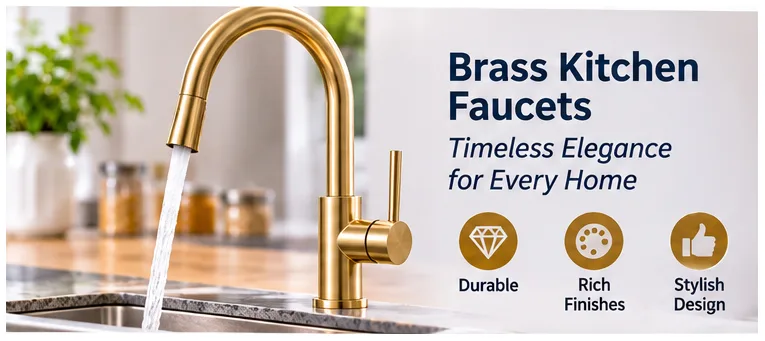
Brass has been widely used in plumbing fixtures for decades because it is relatively easy to machine, cast, and manufacture into complex faucet components.
Many traditional and premium kitchen faucets use brass for their main body, internal components, or other structural parts.
Key Benefits of Brass Kitchen Faucets
1. Excellent Machinability
Brass is relatively easy to machine and cast, making it suitable for producing faucets with complicated shapes and detailed designs.
2. Good Mechanical Performance
Quality brass alloys provide good strength and durability for faucet manufacturing. They can withstand normal household water pressure and regular use when properly designed.
3. Versatile Design Options
Brass faucets can be manufactured in many styles, including traditional, contemporary, luxury, and decorative designs.
4. Wide Range of Surface Finishes
Brass is compatible with various finishing processes, including chrome plating, brushed finishes, polished finishes, and other decorative coatings.
5. Established Plumbing Material
Brass has a long history in plumbing applications. Many manufacturers use brass components because of its established processing methods and manufacturing versatility.
3. Stainless Steel vs Brass Kitchen Faucets: 7 Key Differences
Understanding the differences between these two materials is essential when choosing the best kitchen faucet.
Here is a detailed comparison of their most important characteristics.
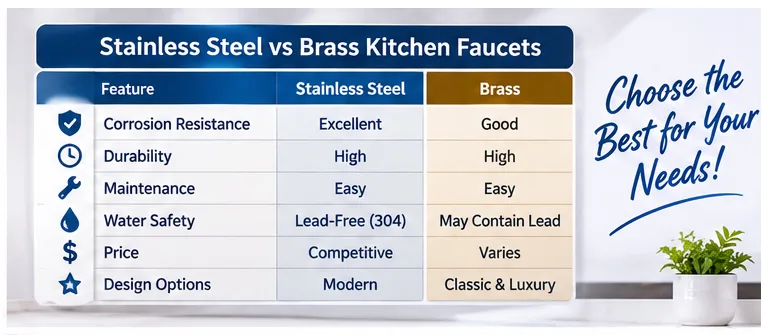
Comparison | Stainless Steel | Brass |
|---|---|---|
Main composition | Iron, chromium, nickel and other elements | Copper and zinc |
Corrosion resistance | Generally excellent, depending on grade and conditions | Good, depending on alloy and water conditions |
Rust resistance | Good to excellent | Does not rust like iron, but may corrode or dezincify |
Strength | High | Good |
Maintenance | Easy | Easy with proper finish care |
Appearance | Modern and clean | Classic and versatile |
Price | Varies by grade and construction | Varies by alloy and construction |
Manufacturing | Machining, forming and casting | Casting, machining and forging |
Let’s look at each important factor in more detail.
3.1 Corrosion Resistance
Corrosion resistance is one of the most important factors when selecting a kitchen faucet.
Stainless steel contains chromium, which forms a protective passive layer on its surface. This layer helps prevent corrosion and can naturally reform when damaged in suitable conditions.
304 stainless steel is widely used because it offers good resistance to moisture and many common household environments.
Brass also provides good corrosion resistance in many plumbing applications. However, its performance depends on the alloy composition and water chemistry. Certain brass alloys may experience dezincification, a process in which zinc is selectively removed from the material.
Which Is Better?
For many kitchen environments, 304 stainless steel is an excellent choice because of its strong general corrosion resistance. However, properly selected plumbing-grade brass can also provide long-lasting performance.
If your home has hard water, explore our guide to [the best kitchen faucets for hard water areas] to learn how to choose a durable and easy-to-maintain faucet.
3.2 Durability and Service Life
A kitchen faucet is used many times every day. Its material should withstand frequent operation, water pressure, temperature changes, and regular cleaning.
Stainless steel offers good strength and resistance to everyday wear. High-quality 304 stainless steel faucets can maintain their structural performance over long periods when manufactured correctly.
Brass is also a durable material. Its excellent machinability makes it possible to produce reliable faucet bodies and complex internal components.
However, the overall service life of a kitchen faucet depends on more than its body material.
Important factors include:
Cartridge quality and performance
Internal valve design
Surface finishing quality
Water pressure and water conditions
Installation quality
Regular maintenance
Which Is Better?
Both materials can provide excellent durability. The quality of the entire faucet, including its cartridge, seals, connections, and manufacturing process, is just as important as the material itself.
For kitchens in coastal or humid environments, you may also want to read about [stainless steel faucets for high-humidity areas].
3.3 Rust Resistance
One common question among buyers is: Do stainless steel faucets rust?
Stainless steel is highly resistant to rust, but it is not completely rust-proof. Exposure to chlorides, harsh chemicals, iron particles, and poor maintenance can damage its protective layer and cause surface staining or corrosion.
Brass behaves differently because it does not contain iron as its main component. Therefore, it does not develop iron rust in the same way as stainless steel. However, brass can still corrode, tarnish, or experience dezincification under certain conditions.
Which Is Better?
Stainless steel is an excellent choice for buyers who prioritize rust resistance. Brass is also suitable for plumbing applications, but its corrosion performance depends on the alloy and water conditions.
3.4 Water Safety and Lead Content
Water safety is an important consideration when purchasing kitchen faucets, especially because kitchen faucets are commonly used for drinking water and food preparation.
Stainless steel is often selected for its corrosion resistance and lack of intentional lead addition in standard 304 stainless steel compositions.
However, stainless steel construction alone does not automatically guarantee that every water-contact component is compliant with drinking-water requirements.
Brass alloys may contain lead unless specifically manufactured to meet applicable lead-free requirements.
Today, many manufacturers offer lead-free brass kitchen faucets designed to comply with relevant regulations and standards.
When choosing a kitchen faucet, buyers should check:
Material specifications
Lead content requirements
Applicable drinking-water certifications
Compliance of water-contact components
Testing documentation from the manufacturer
Which Is Better?
304 stainless steel is an attractive option for buyers concerned about lead-containing materials. However, certified lead-free brass faucets can also be safe choices.
Always check the applicable certification and compliance requirements in your target market.
Water safety is another important factor when selecting a kitchen faucet. Read more about [whether stainless steel faucets are safe for drinking water] and what buyers should consider.
3.5 Appearance and Surface Finishes
The appearance of a kitchen faucet can significantly influence the overall design of a kitchen.
Stainless steel faucets are especially popular in modern kitchens because of their clean, neutral appearance.
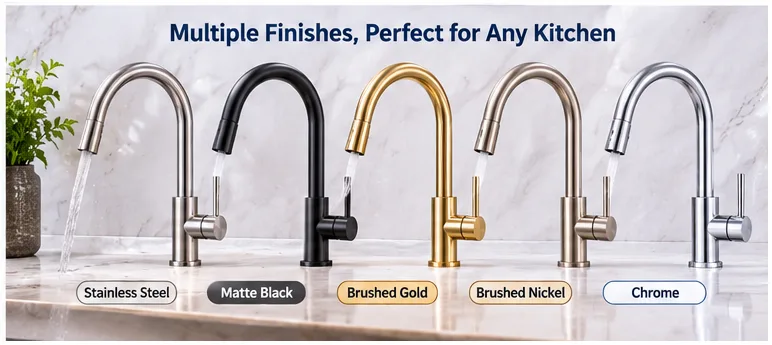
Common stainless steel finishes include:
Brushed stainless steel
Polished stainless steel
Brushed nickel
Matte black
PVD gold
Gunmetal gray
Brass faucets offer a wide range of decorative possibilities. They are often available in chrome, brushed nickel, polished gold, antique bronze, and other finishes.
Which Is Better?
Stainless steel is an excellent option for contemporary and minimalist kitchens. Brass is a versatile choice for buyers who want traditional, luxury, or decorative designs.
The best option depends on the kitchen’s overall style and the desired finish.
3.6 Maintenance and Cleaning
Kitchen faucets are constantly exposed to water spots, soap residue, grease, and mineral deposits.
Stainless steel faucets are generally easy to maintain. Regular cleaning with a soft microfiber cloth and mild soap is usually sufficient.
Brass faucets are also relatively easy to clean, but their maintenance requirements depend on the surface finish. Some decorative finishes may require more careful cleaning to avoid damaging the coating.
For both materials, avoid:
Strong acidic cleaners
Abrasive cleaning pads
Harsh chemical products
Chlorine-based cleaners unless specifically approved
Which Is Better?
Both materials are relatively easy to maintain. Stainless steel is particularly convenient for buyers who prefer a simple, low-maintenance kitchen faucet.
3.7 Price and Overall Value
Price is another important factor when choosing between stainless steel and brass kitchen faucets.
The final cost depends on several factors, including:
Raw material prices
Material grade and composition
Manufacturing processes
Faucet design and construction
Cartridge and accessory quality
Surface finishing
Brand positioning
Stainless steel faucets are available in different price ranges. Standard models may be affordable, while premium 304 stainless steel faucets with advanced designs and finishes can cost more.
Brass faucets also cover a wide price range. Basic models can be economical, while premium solid-brass faucets with specialized finishes may be expensive.
Which Is Better?
Neither material is always cheaper. Buyers should compare the complete product specification rather than judging a faucet by its material name alone.
For wholesale buyers, requesting material details, product samples, and a clear quotation is a better way to evaluate overall value.
4. Which Kitchen Faucet Material Is Better for Different Applications?
The best kitchen faucet material depends on the installation environment, design preferences, budget, and expected performance.
Here are some recommendations for different applications.
4.1 For Modern Residential Kitchens
For modern residential kitchens, stainless steel faucets are an excellent choice.
Their clean appearance complements stainless steel sinks, modern countertops, and contemporary kitchen appliances.
304 stainless steel faucets are particularly suitable for homeowners who want a durable, corrosion-resistant, and easy-to-maintain product.
4.2 For Luxury Kitchen Designs
Brass kitchen faucets are a popular option for luxury and traditional kitchen designs.
They can be manufactured in different shapes and decorative finishes, including brushed gold, polished chrome, and antique bronze.
For homeowners who prioritize decorative details and design flexibility, brass is worth considering.
4.3 For Commercial Kitchens and Hotels
Commercial kitchens and hotel projects require faucets that can handle frequent use and regular cleaning.
Stainless steel faucets are attractive for these applications because of their corrosion resistance and practical maintenance requirements.
However, properly specified brass faucets can also perform well in commercial environments.
For project buyers, it is important to evaluate product specifications, water pressure requirements, cartridge performance, and maintenance costs.
5. How to Choose the Best Kitchen Faucet Material
Before purchasing a kitchen faucet, consider the following factors to make a more informed decision.
5.1 Check the Stainless Steel Grade or Brass Alloy
If you choose stainless steel, check whether the faucet is made from 304 stainless steel or another grade.
Not all stainless steel faucets use the same material. Different grades have different chemical compositions and corrosion resistance.
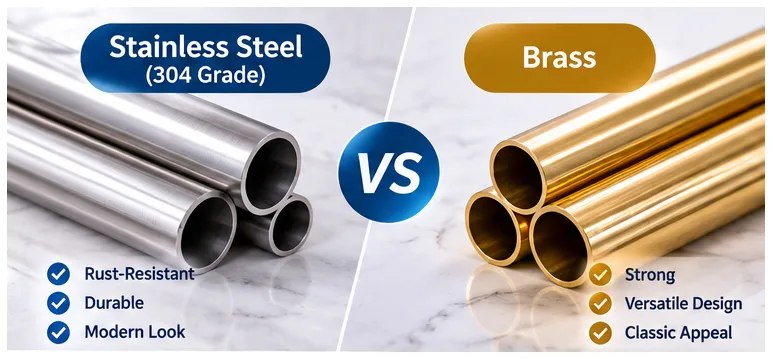
If you choose brass, ask about the alloy composition and whether it meets the lead-content requirements of your target market.
5.2 Consider the Water Quality in Your Area
Water quality can affect the performance and appearance of kitchen faucets.
For example, hard water contains higher levels of dissolved minerals, which can leave white deposits on faucet surfaces.
In areas with aggressive water chemistry or high chloride levels, material selection becomes especially important.
Choosing a suitable material and maintaining the faucet regularly can help extend its service life.
5.3 Choose the Right Faucet Cartridge
The cartridge is one of the most important components of a kitchen faucet.
It controls water flow and temperature. Even a high-quality stainless steel or brass faucet may experience problems if it uses a poor-quality cartridge.
When selecting a kitchen faucet, consider:
Ceramic cartridge quality
Water leakage resistance
Smooth handle operation
Pressure performance
Replacement availability
A reliable ceramic cartridge can improve the overall performance and lifespan of a faucet.
5.4 Select a Suitable Surface Finish
Surface finishing affects both appearance and maintenance.
Popular kitchen faucet finishes include:
Chrome: Bright, classic, and easy to match with different kitchens.
Brushed nickel: Modern appearance with a softer metallic look.
Matte black: Contemporary and stylish.
Brushed stainless steel: Clean and practical for modern kitchens.
PVD gold: Premium appearance for luxury interiors.
Choose a finish that matches your kitchen sink, cabinet hardware, and overall design.
5.5 Compare Product Quality, Not Just Price
When purchasing a kitchen faucet, a low price does not always mean better value.
Compare the material, cartridge, internal structure, surface treatment, accessories, and warranty.
For wholesale buyers, checking product samples before placing a large order is especially important.
Before making a final decision, check our guide on [how to choose the best stainless steel kitchen faucet] to understand the important features and specifications.
6. Are Stainless Steel Kitchen Faucets Better Than Brass Faucets?
There is no single answer for every buyer.
Stainless steel kitchen faucets offer several advantages, including good corrosion resistance, modern styling, and relatively simple maintenance. They are particularly attractive for residential kitchens, modern apartments, and commercial projects.
Brass kitchen faucets are also excellent products. Their machinability, established manufacturing processes, and versatile decorative finishes make them popular in different markets.
Here is a quick summary:
| Your Priority | Recommended Material |
|---|---|
| Modern kitchen appearance | Stainless Steel |
| Corrosion resistance | 304 Stainless Steel |
| Decorative faucet designs | Brass |
| Easy everyday maintenance | Both |
| Traditional kitchen style | Brass |
| Stainless steel sink matching | Stainless Steel |
| Lead-conscious material selection | 304 Stainless Steel |
| Wide range of decorative finishes | Both |
Our recommendation: If you prefer a modern, practical kitchen faucet with good corrosion resistance, 304 stainless steel is an excellent option. If you prefer a traditional design or a wide range of decorative shapes, a quality brass faucet is also worth considering.
The most important thing is to select a well-manufactured faucet with reliable internal components and suitable material specifications.
7. Why Are 304 Stainless Steel Kitchen Faucets Becoming Popular?
304 stainless steel kitchen faucets are becoming an attractive option for homeowners, distributors, and construction projects.
Several factors contribute to their popularity.
Growing Demand for Durable Products
Consumers increasingly look for kitchen products that offer long-term value. Stainless steel is widely recognized for its strength and corrosion resistance.
Modern Kitchen Design Trends
Stainless steel finishes complement contemporary kitchen appliances, sinks, and accessories.
Practical Maintenance
Homeowners often prefer products that are easy to clean and maintain. Stainless steel faucets meet this requirement when properly finished.
Versatile Product Applications
304 stainless steel can be used in different kitchen faucet designs, including:
Single-handle kitchen faucets
Pull-down kitchen faucets
Pull-out kitchen faucets
Commercial kitchen faucets
Wall-mounted kitchen faucets
Water filter faucets
For distributors and importers, stainless steel kitchen faucets can also provide opportunities to expand their product portfolios with different designs, sizes, and finishes.
8. What Should Wholesale Buyers Know About Stainless Steel and Brass Faucets?
For importers, wholesalers, and sanitary ware distributors, choosing the right faucet material is not only about appearance and performance. It also involves product consistency, purchasing costs, and market demand.
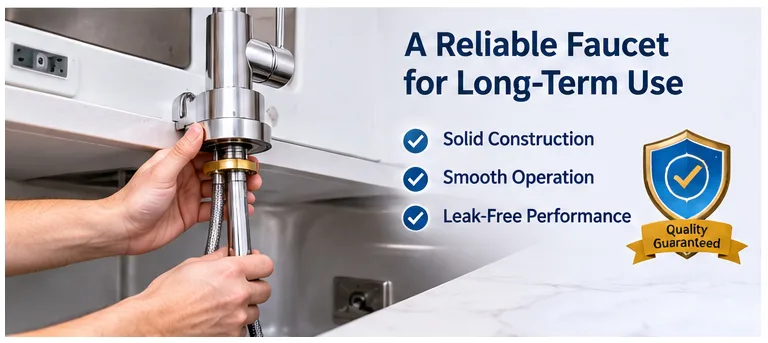
Before placing a bulk order, consider these important points.
1. Verify Material Specifications
Ask the manufacturer to confirm the actual material used in the faucet body and other water-contact components. Do not assume that every product advertised as stainless steel is made from 304 stainless steel.
2. Request Product Samples
Evaluate the product’s weight, surface finish, handle operation, cartridge, and overall construction.
3. Check Quality Control
A reliable faucet manufacturer should have quality inspection procedures covering raw materials, machining, assembly, water leakage, and finished products.
4. Compare OEM and ODM Services
If you are building your own brand, look for suppliers that offer OEM and ODM services, customized packaging, product development, and flexible product specifications.
5. Confirm Market Requirements
Different countries may have different requirements for drinking-water contact materials, lead content, pressure testing, and product certifications.
Importers should confirm the applicable standards before ordering.
6. Evaluate Delivery Time and Supply Capacity
For wholesalers and distributors, stable production capacity and on-time delivery are important for maintaining inventory and meeting customer demand.
Working with an experienced faucet manufacturer can help reduce purchasing risks and improve supply-chain efficiency.
9. Frequently Asked Questions (FAQs)
Both materials have advantages. Stainless steel offers excellent corrosion resistance and a modern appearance, while brass provides good machinability and versatile design options. The best choice depends on your budget, design preferences, and application.
304 stainless steel is highly corrosion-resistant but not completely rust-proof. Chlorides, harsh chemicals, and poor maintenance can cause surface corrosion or staining.
Some brass alloys may contain lead. However, manufacturers also produce lead-free brass faucets that meet applicable regulations. Always check material specifications and relevant certifications.
Both high-quality stainless steel and brass faucets can last for many years. Their service life depends on material quality, cartridge performance, manufacturing standards, water conditions, and maintenance.
Not necessarily. Prices vary depending on material grade, manufacturing process, design, finish, and internal components. Compare complete product specifications rather than material names alone.
Yes. 304 stainless steel offers good corrosion resistance, strength, and durability, making it a popular material for kitchen faucets and other household plumbing products.
Chrome, brushed nickel, brushed stainless steel, matte black, and PVD gold are popular options. The best finish depends on kitchen design, maintenance preferences, and product quality.
10. Final Verdict: Stainless Steel vs Brass Kitchen Faucets
When comparing stainless steel vs brass kitchen faucets, both materials offer excellent benefits for different applications.
Stainless steel is an excellent choice for buyers who value corrosion resistance, modern appearance, easy maintenance, and practical performance. In particular, 304 stainless steel faucets are suitable for many residential and commercial kitchen applications.
Brass remains a popular material because of its machinability, manufacturing versatility, and wide range of decorative finishes.
Ultimately, the best kitchen faucet is not determined by material alone. Product construction, cartridge quality, surface finishing, manufacturing standards, and proper maintenance all play important roles.
Whether you choose stainless steel or brass, investing in a high-quality kitchen faucet can improve everyday convenience and provide long-term value.